Why do we speak of “Cult Brands” or “Love Brands” when referring to successful companies? Because branding, in its highest form, is not a marketing discipline- it is a theological one. It is not about logos; it is about symbols. It is not about slogans. It is about creeds.
I know the power of belief. It is the strongest human driver we know. Belief creates order out of chaos and bestows meaning upon the profane. When I analyze today’s brand landscape, I am fascinated by the precision with which world-class brands weave archaic narratives and mythological codes into their DNA. They do not do this out of nostalgia. They do it because they know that a product without a myth remains a mere commodity – interchangeable, ephemeral, and ultimately meaningless.
Here is a deconstruction of the “ancient codes” that shape our digital and physical world today:
1. Nike
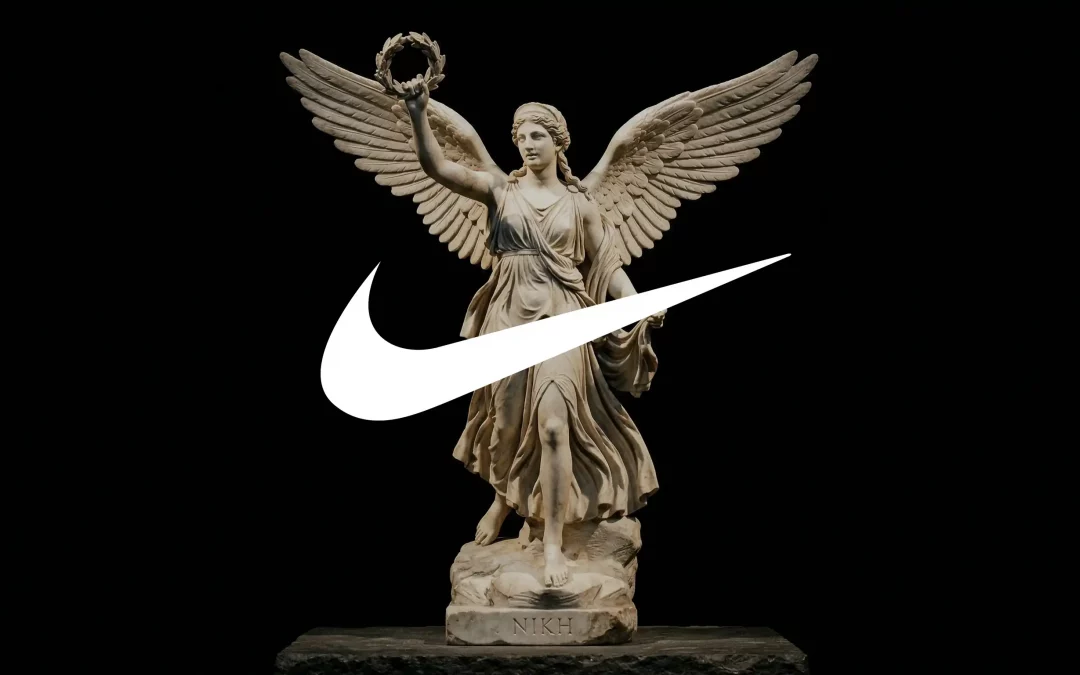
The Wing of Victory (Greek Mythology)
• What they do: The world’s leading manufacturer of athletic footwear and apparel.
• The Myth: Nike is not an invented word; it is the name of the winged Goddess of Victory. The “Swoosh” is not a checkmark—it is the wing of this deity. The brand does not sell a shoe; it sells the divine favor of victory. To wear Nike is to ritually step into the path of invincibility.
2. Hermès
The Messenger Between Worlds (Greek Mythology)
• What they do: A French luxury house, famous for handcrafted leather goods and silk.
• The Myth: Named after Hermes, the God of magic, commerce, and transitions. He is the boundary-crosser, the only one permitted to mediate between the underworld, the world of men, and Olympus. This is the essence of luxury: the product is the mediator. It lifts the owner out of the profane everyday and into a sacred, exclusive world.
3. Lululemon
The Harmony of Stillness (Hinduism)
• What they do: Premium apparel for yoga and technical training.
• The Myth: The brand is rooted in Vedic philosophy. Its logo is an abstraction of the Sanskrit symbol “Ohm.” Lululemon does not sell sportswear; it sells the path to enlightenment and inner unity. The leggings become the ritual uniform of a new, health-conscious elite.
4. Versace
The Captivating Aesthetic (Ancient Mythology)
• What they do: An Italian fashion empire, the epitome of opulence and glamour.
• The Myth: The head of Medusa. In mythology, her gaze turned onlookers to stone. Versace uses this image for a beauty so absolute and “fatal” that one cannot escape it. It is a design of dominance that makes no compromises.
5. Maserati
Mastery Over the Elements (Roman Mythology)
• What they do: An Italian manufacturer of luxury sports cars.
• The Myth: The trident of the sea god Neptune. It symbolizes mastery over the primordial forces of nature. A Maserati is not meant to just drive—it is meant to control the road as if the forces of nature were its subjects.
6. ASUS
Winging the Spirit (Greek Mythology)
• What they do: Global manufacturer of computers, laptops, and hardware.
• The Myth: The name is derived from Pegasus, the winged horse representing inspiration, knowledge, and transcendence. ASUS uses this core to position technological innovation as a form of intellectual liberation.
7. Canon EOS
The Dawn of a New Era (Greek Mythology)
• What they do: A world leader in cameras and optical systems.
• The Myth: The famous camera series is named after Eos, the Goddess of the Dawn. In photography, where everything depends on light, this is the perfect image: the moment light dispels darkness and the image becomes visible.
8. Dove
The Symbol of Purity (Greek Mythology)
• What they do: International brand for personal care and cosmetics.
• The Myth: The dove was the sacred bird of Aphrodite, the Goddess of Beauty. While other brands focus on artificial enhancement, Dove uses this millennial symbol for natural softness, innocence, and a nearly sacred form of purity.
9. Gillette Venus
The Ideal of Form (Roman Mythology)
• What they do: Specialized product line for women’s razors.
• The Myth: Named after Venus, the Roman equivalent of Aphrodite. Here, the ideal of divine, flawless beauty is directly invoked. The brand does not sell mere hair removal, but the approximation of an aesthetic ideal.
10. Mars
The Energy of Power (Roman Mythology)
• What they do: Globally recognized manufacturer of confectionery and food.
• The Myth: Though the founders’ surname was Mars, the brand leverages the association with the God Mars (Ares). He stands for energy, vitality, and assertiveness—a fitting narrative for a snack promising “renewed energy.”
11. Apollo
The Clarity of Sight (Greek Mythology)
• What they do: A leading optical chain for glasses and contact lenses.
• The Myth: Apollo is the God of light, truth, and prophecy. For an optician, there is no stronger symbolism: those who see clearly, recognize the truth. Apollo represents visual precision and the light that makes the world recognizable.
12. Janus Henderson
The Sovereignty of the Moment (Roman Mythology)
• What they do: A global investment management firm.
• The Myth: Named after Janus, the two-faced God. He looks simultaneously back at the past (experience) and forward into the future (strategy). For a financial service provider, this is the ultimate promise of foresight and security.
13. Goodyear
The Lightness of Mercury (Roman Mythology)
• What they do: One of the world’s largest tire manufacturers.
• The Myth: The logo features the winged foot of Mercury. The message is speed and the overcoming of gravity. The tire becomes a divine tool that makes contact with the ground feel nearly weightless.
14. Atlas Copco
The Strength of Unwavering Resolve (Greek Mythology)
• What they do: A global industrial group for compressed air and vacuum solutions.
• The Myth: Atlas, the Titan who carried the heavens on his shoulders. In an industrial context, this name stands for the ability to shoulder massive loads and complex tasks with absolute reliability.
15. Pandora
The World of Discovery (Greek Mythology)
• What they do: A Danish jewelry company, known for customizable charm bracelets.
• The Myth: Pandora was the first woman to receive a gift (a jar/box) from the gods. The branding utilizes the motif of curiosity and the infinite treasures waiting to be discovered within a small box.
16. Ajax
The Conqueror of Chaos (Greek Mythology)
• What they do: A well-known brand for household cleaners.
• The Myth: Named after the Greek hero Ajax, renowned for his enormous strength and indomitability. The message: the product is a “hero” that defeats dirt with a strength that transcends human measure.
Beyond the Surface: Symbols as Vessels
What can we learn from these giants? That a symbol is never just a graphic.
I am convinced that symbols which have been prayed to for centuries or even millennia possess a power of their own. They have been energetically charged by the attention and belief of millions. They are no longer mere drawings; they have become vessels of belief. When a brand chooses such a symbol, it borrows this immense, superhuman energy.
However, herein lies the danger: mythology in branding must never be a mere facade. An ancient name or a divine symbol alone does not create an aura. On the contrary: if the claim of the myth and the reality of the product do not align, the branding appears pretentious and hollow.
True mythology must be lived.
It must extend across all touchpoints—from the first click on the website to the tactile experience of the packaging. It must be deeply woven into the mission and vision of the company. Only when the brand’s actions correspond with the grandeur of its symbol does that authentic depth arise which turns customers into followers.
The Brand as a Mediator to the Greater Whole
Why do we strive for this mythological grounding? Because it helps the brand appear more sublime. It appeals to an idea larger than oneself, larger than the company, and larger than the mere product.
In my work as a Creative Director, I often see the brand mark as the necessary mediator: the brand stands between the ancient deity—the eternal ideal of victory, beauty, or wisdom—and the customer. The product becomes the ritual tool that allows the user access to this higher idea.
When an athlete wears Nike, it is the brand that facilitates access to the “spirit of victory.” When a traveler reaches for their Hermès bag, the brand provides the feeling of being a sovereign crosser between worlds.
Design, to me, is therefore much more than the optimization of surfaces. It is the search for the core that makes a brand valuable. I help companies not just build functional solutions, but create spaces of resonance. Because in the end, people do not buy functions. They search for meaning. They search for a world they can believe in.


International Freelance Creative Director & Digital Product Designer
Let's create something meaningful together
I love what I do - for me, design is less of a job and more of a calling. That's why I enjoy working with ambitious individuals and mid-sized businesses just as much as I do with global players. If you bring that same passion to your project, I’d love to hear from you. Let’s find out together how we can take your vision to the next level.