In the digital world, familiarity is often equated with usability. We are told that “frictionless” is the ultimate goal. But in the high-end segment, too much familiarity is dangerous. If every interface follows the same hyper-optimized patterns of a mass-market retailer, the brand loses its soul. If everything feels like Amazon, nothing feels like Porsche.
To create a sanctuary of clarity in a chaotic world, a Creative Director must know when to follow the rules to ensure functionality—and when to break them to create Aura. True luxury is not about being “easy to use”; it is about being exquisite to experience.
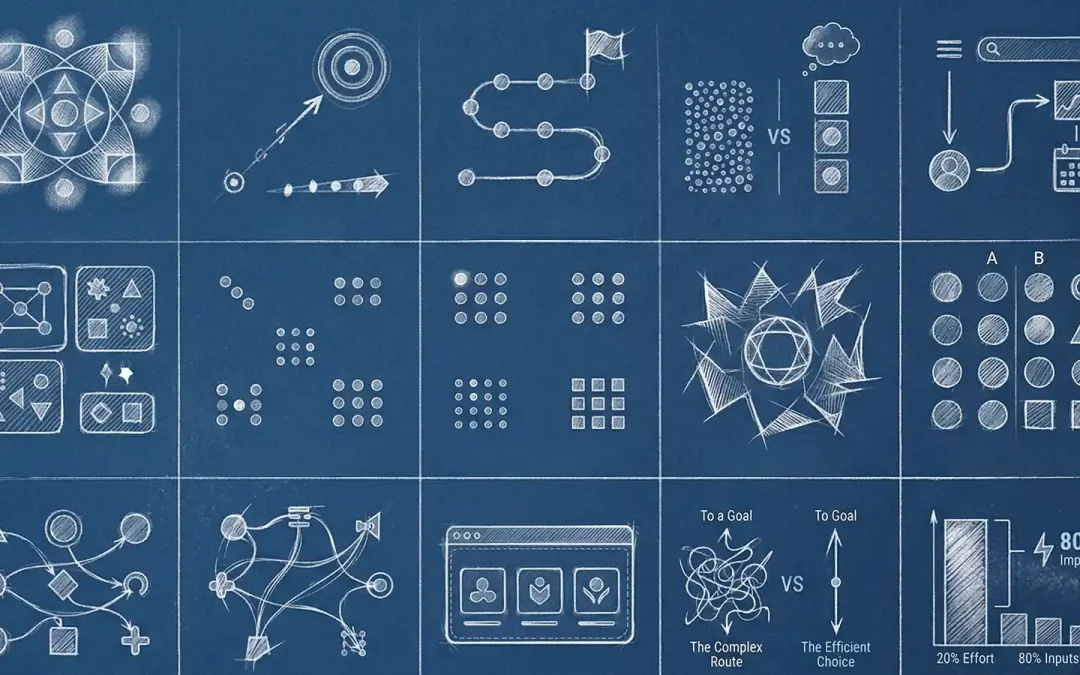
Here are the 21 Laws of UX, deconstructed for both the “Hunter” (Retail) and the “Collector” (Luxury).
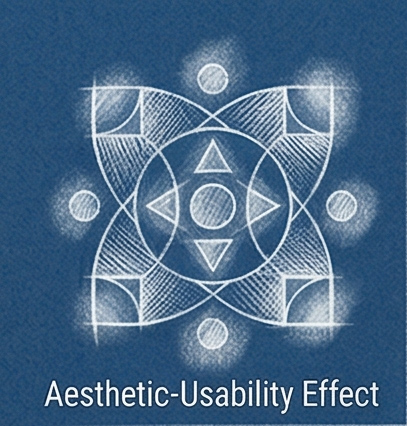
1. Aesthetic-Usability Effect
- The Rule: Users often perceive aesthetically pleasing design as design that’s more usable.
- For Conversion: Use high-contrast buttons and clean layouts to mask a complex checkout process.
- For Luxury: Invest in “Visual Silence.” The beauty of the interface acts as a Trust Accelerator, allowing the user to forgive a slower, more deliberate pace.
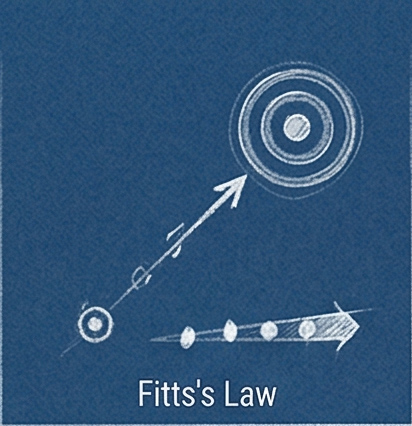
2. Fitts’s Law
- The Rule: The time to acquire a target is a function of the distance to and size of the target.
- For Conversion: Make the “Add to Cart” button massive and stick it to the bottom of the screen.
- For Luxury: Use precise, elegant hit areas. A smaller, perfectly placed button communicates Meticulousness rather than desperate urgency.
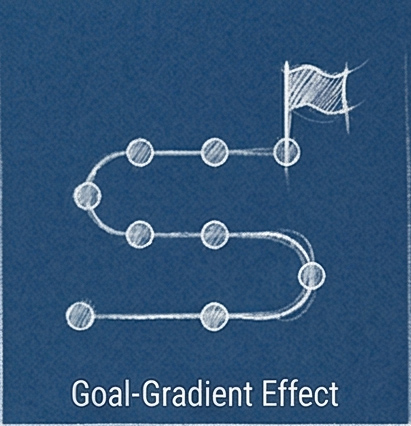
3. Goal-Gradient Effect
- The Rule: The closer users are to a goal, the faster they work to complete it.
- For Conversion: Show a progress bar (e.g., “You are 80% done!”) to push the user through a form.
- For Luxury: Use the gradient to build Anticipation. Instead of rushing the user, celebrate each step of the “Bespoke” configuration process.
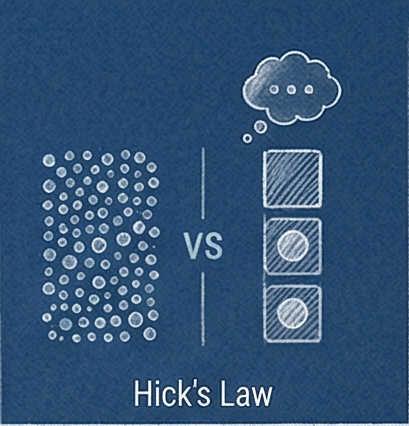
4. Hick’s Law
- The Rule: The time it takes to make a decision increases with the number and complexity of choices.
- For Conversion: Limit choices to “Buy Now” or “Save for Later” to prevent analysis paralysis.
- For Luxury: Offer Curation. Luxury is the absence of noise. By offering three perfect choices instead of thirty, the brand asserts its Sovereignty.
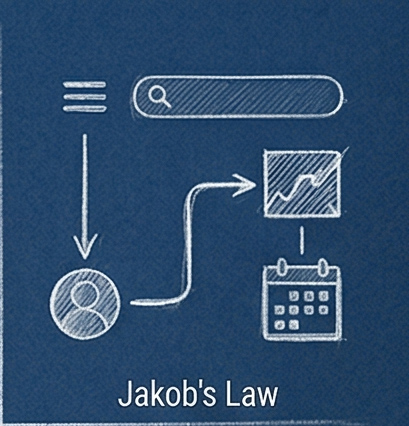
5. Jakob’s Law
- The Rule: Users spend most of their time on other sites. They prefer your site to work the same way.
- For Conversion: Mimic Amazon’s navigation. Don’t make them think. Just let them buy.
- For Luxury: Follow the law for utility (Search, Cart) but break it for Storytelling. If your brand feels like “every other site,” you’ve failed to create an Icon.
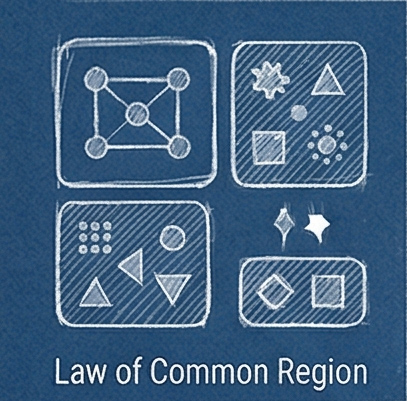
6. Law of Common Region
- The Rule: Elements tend to be perceived as groups if they are sharing an area with a clearly defined boundary.
- For Conversion: Use cards and borders to separate “Upsells” from the main product.
- For Luxury: Use Invisible Grids. Group elements through alignment and white space rather than heavy borders. It feels more “Airy” and sophisticated.
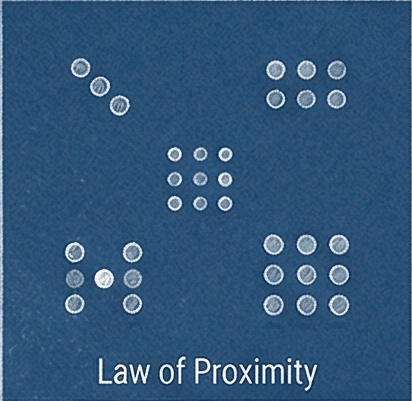
7. Law of Proximity
- The Rule: Objects that are near, or proximate to each other, tend to be grouped together.
- For Conversion: Put the price right next to the button to reduce eye movement.
- For Luxury: Use generous spacing. Increased distance between elements signals Exclusivity and prevents the “cluttered discount” look.
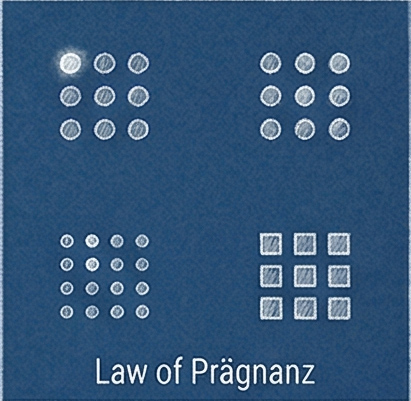
8. Law of Prägnanz
- The Rule: People will perceive and interpret ambiguous or complex images as the simplest form possible.
- For Conversion: Use standard icons (Heart, Cart, Profile) so users don’t have to guess.
- For Luxury: Use Abstracted Symbolism. A slightly more complex, unique icon forces the brain into a moment of “Analytical Depth,” making the brand more memorable.
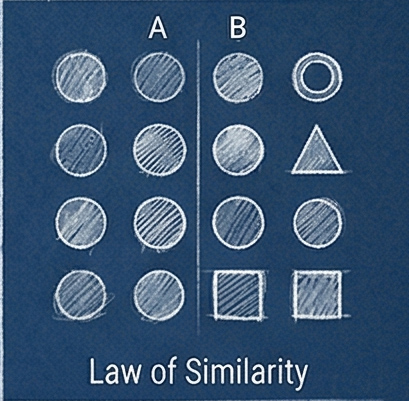
9. Law of Similarity
- The Rule: The human eye tends to perceive similar elements in a design as a complete picture, shape, or group.
- For Conversion: Make all “Sale” items the same bright color to draw the eye.
- For Luxury: Use subtle textural similarities. A specific type of shadow or a unique serif font creates a Coherent Direction without being “loud.”
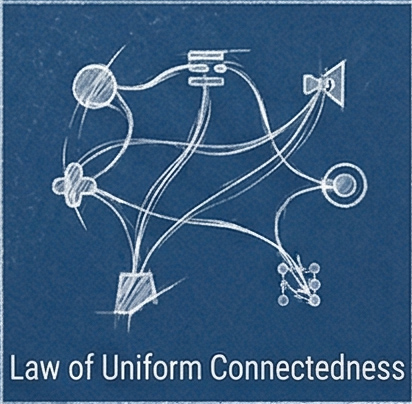
10. Law of Uniform Connectedness
- The Rule: Elements that are visually connected are perceived as more related than elements with no connection.
- For Conversion: Use lines or arrows to point the user toward the “Checkout.”
- For Luxury: Use Biological Motion. Connect elements through smooth, organic transitions rather than static lines.
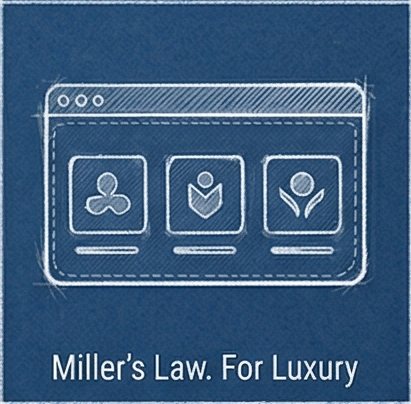
11. Miller’s Law
- The Rule: The average person can only keep 7 (plus or minus 2) items in their working memory.
- For Conversion: Chunk information into small bits to avoid overwhelming the shopper.
- For Luxury: Aim for 3 to 5 items. Reduction is the ultimate form of politeness.
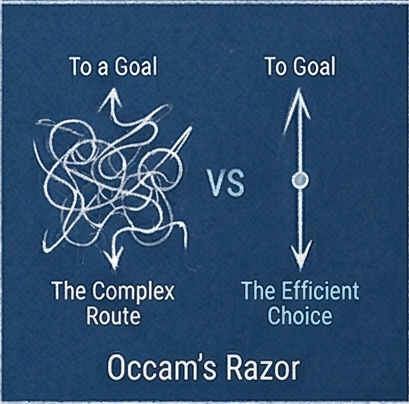
12. Occam’s Razor
- The Rule: Among competing hypotheses, the one with the fewest assumptions should be selected.
- For Conversion: Remove every unnecessary click.
- For Luxury: Keep the “Soul” of the experience. If a “shorter path” removes the emotional depth of a brand story, keep the long path.
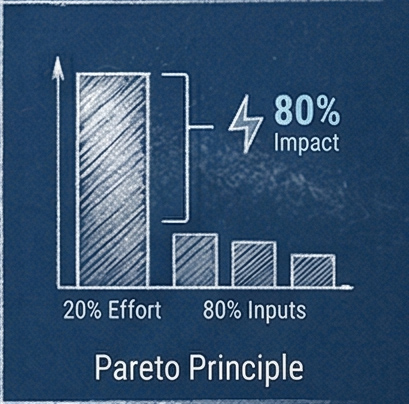
13. Pareto Principle
- The Rule: 80% of the effects come from 20% of the causes.
- For Conversion: Focus 100% of your energy on the “Buy” button and “Product Images.”
- For Luxury: Focus on the “Meticulous 20%” – the micro-interactions, the typography, and the “Hidden Symbolism” that most users won’t notice, but the right users will feel.
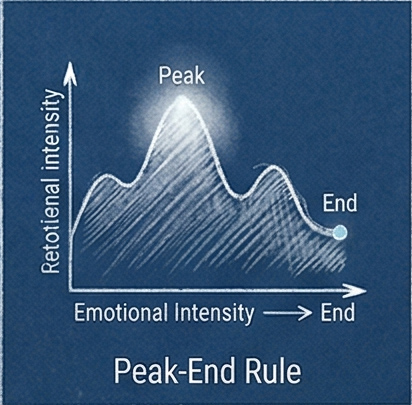
14. Peak-End Rule
- The Rule: People judge an experience largely based on how they felt at its peak and at its end.
- For Conversion: Make the purchase confirmation screen very rewarding (confetti, discounts).
- For Luxury: The “End” should be a Moment of Calm. A simple, elegant “Thank You” screen is more powerful than a loud celebration.
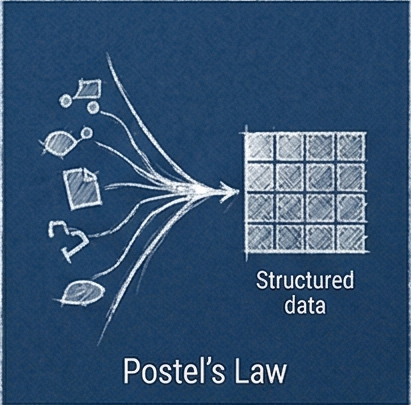
15. Postel’s Law
- The Rule: Be liberal in what you accept, and conservative in what you send.
- For Conversion: Allow users to type their address anyway they want. Let the system fix it.
- For Luxury: Maintain Structural Integrity. If a user enters data incorrectly, guide them with “Quiet Authority” back to the brand’s standards.
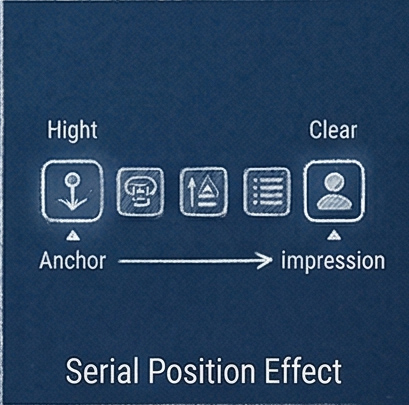
16. Serial Position Effect
- The Rule: Users have a tendency to best remember the first and last items in a series.
- For Conversion: Put the “Best Seller” first and the “Discounted” item last.
- For Luxury: Put the “Iconic Piece” first to anchor the brand’s status, and the “Heritage Story” last to leave a lasting impression of depth.
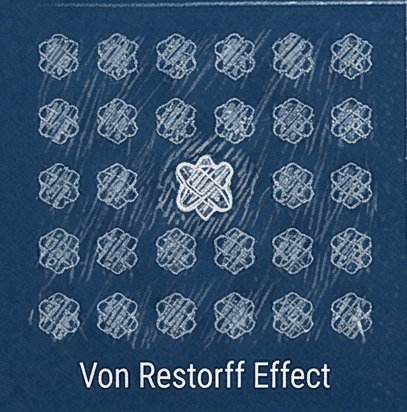
17. Von Restorff Effect
- The Rule: The isolation effect predicts that when multiple similar objects are present, the one that differs from the rest is most likely to be remembered.
- For Conversion: Use a “Limited Time Offer” badge in a bright, clashing color.
- For Luxury: Use Subtle Contrast. A single, perfectly placed serif word in a sans-serif environment is enough to draw the eye without breaking the “Silent Design.”
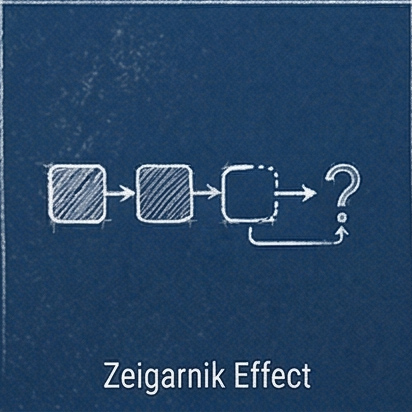
18. Zeigarnik Effect
- The Rule: People remember uncompleted or interrupted tasks better than completed ones.
- For Conversion: Use “Cart Abandonment” emails to remind users they didn’t buy.
- For Luxury: Use Mystery. An unfinished brand story or a “Teaser” of a new collection creates an intellectual “itch” that only further engagement can scratch.
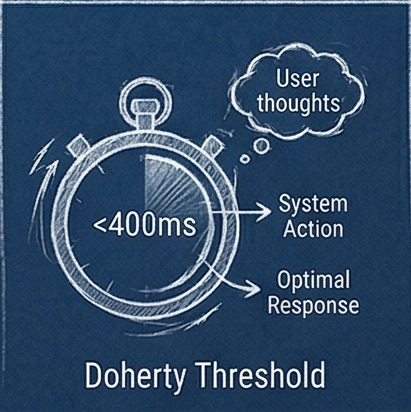
19. Doherty Threshold
- The Rule: Productivity skyrockets when a computer and its users interact at a pace (<400ms) that ensures that neither has to wait on the other.
- For Conversion: Everything must load instantly. Zero lag.
- For Luxury: Use Intentional Friction. Sometimes, a deliberately slow “Reveal” animation creates the feeling of a heavy, velvet curtain opening, adding perceived value.
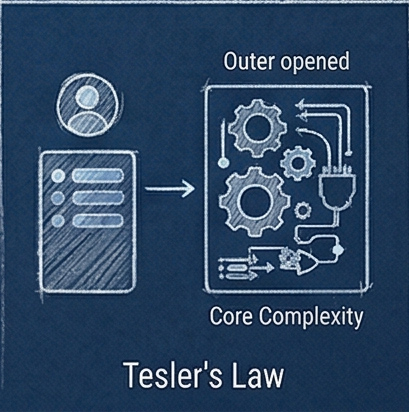
20. Tesler’s Law
- The Rule: For any system, there is a certain amount of complexity which cannot be reduced.
- For Conversion: Hide complexity from the user at all costs.
- For Luxury: Embrace the Complexity of Craft. Show the user the “Architecture” of how a product is made. Let them see the gears.
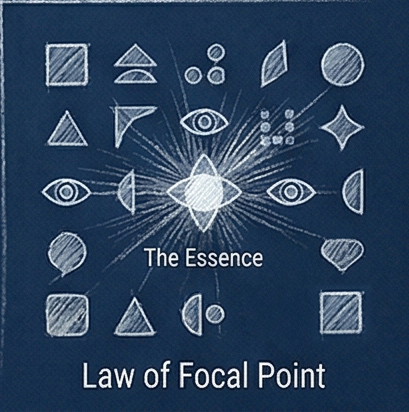
21. Law of Focal Point
- The Rule: Whatever stands out visually will capture and hold the viewer’s attention first.
- For Conversion: The “Price” or “Discount” is the focal point.
- For Luxury: The “Artistic Detail” or the “Heritage Symbol” is the focal point. Focus on the Essence, not the Transaction.
SUMMARY: THE STRATEGY OF CHOICE
Design systems provide the foundation, but strategy provides the direction. If you follow every UX law to the letter, you will build a functional “Supermarket.” If you know where to apply Intentional Friction and Visual Silence, you build a “Sanctuary.”


Let's create something meaningful together
I love what I do - for me, design is less of a job and more of a calling. That's why I enjoy working with ambitious individuals and mid-sized businesses just as much as I do with global players. If you bring that same passion to your project, I’d love to hear from you. Let’s find out together how we can take your vision to the next level.