Sensuality and Calculus: The Anatomy of the Ferrari Myth
Brands with depth demand more than decoration. They require a rigorous alignment of every detail toward a central truth. When strategy, product, and design drift apart, a brand loses its clarity. Viewed through this strategic lens, Ferrari reveals itself not as an ordinary automotive manufacturer, but as a masterclass in coherence, scarcity, and the power of authenticity.
The fascination with Ferrari is no accident, even if its origins were exactly that. It is the result of a brand that does not resolve its deepest contradictions but instead makes them its foundation.
The Origin: Character as Strategy
The world’s most valuable brands—whether Rolex, Hermès, or Leica—are built on a clear, often uncompromising stance. At Ferrari, this stance was the relentless personality of its founder.
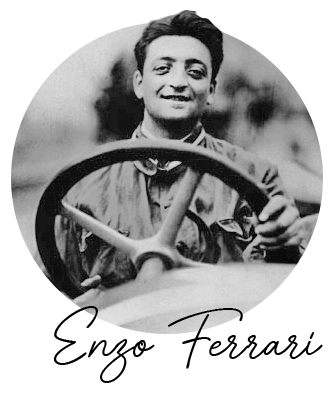
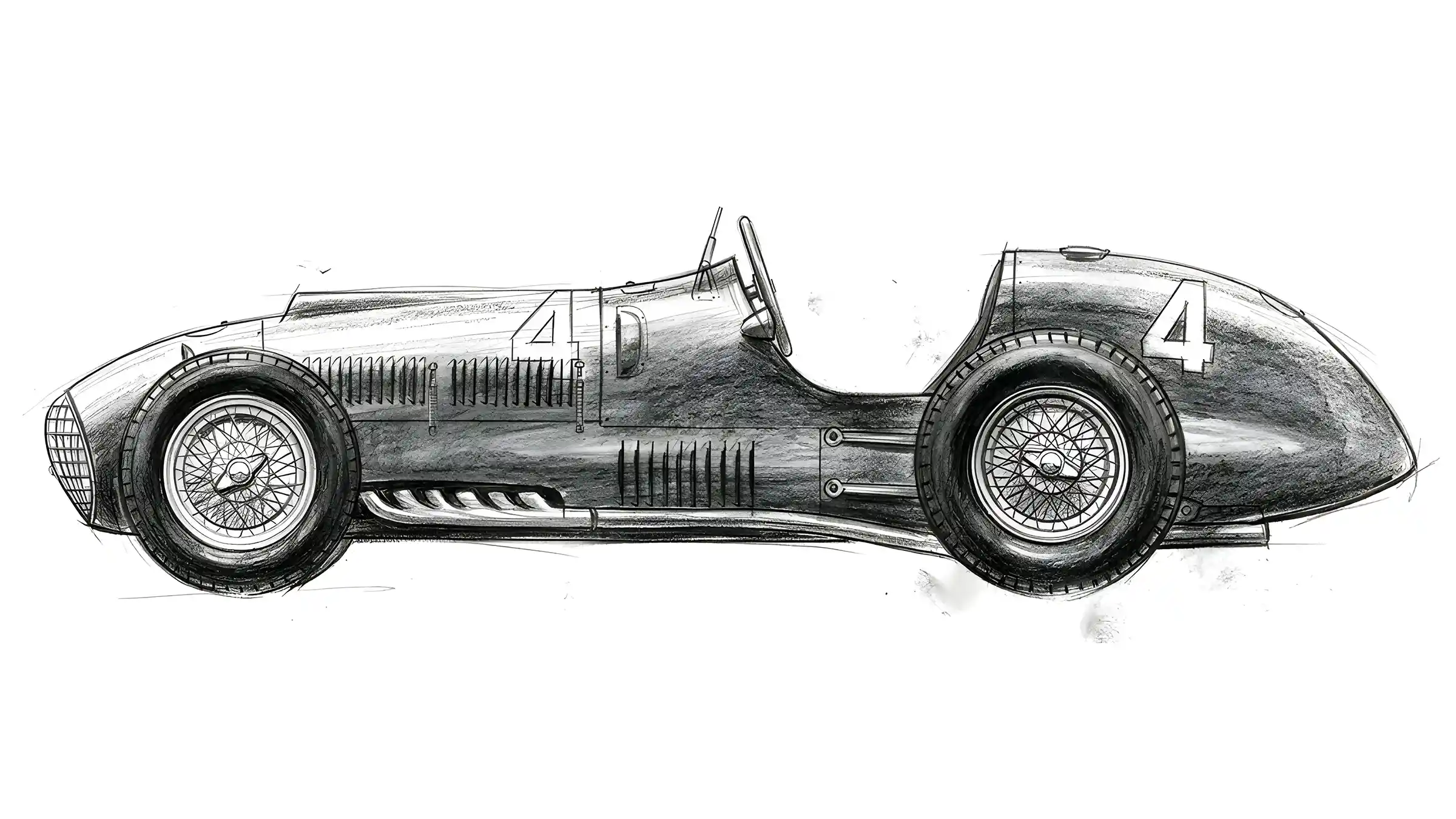
Enzo Ferrari did not found Scuderia Ferrari in 1929 to create mobility, but to win races. When he was forced to build his own road cars in 1947, they served exclusively to fund his racing team. This singularity of purpose gave the brand absolute, uncorruptible authenticity from day one.
Enzo’s often brash, dismissive behavior toward customers established—long before the term “anti-marketing” existed—the psychology of scarcity. The most famous anecdote of this attitude is his encounter with Ferruccio Lamborghini. When the latter complained about the clutch in his Ferrari, Enzo dismissed him by saying a tractor manufacturer would never understand a Ferrari. This rejection was not a business failure; it was the ultimate proof of the brand’s exclusivity. One did not simply buy a Ferrari; one earned the right to own one.
Even historical accidents were consistently integrated into the brand myth: the iconic Cavallino Rampante was the coat of arms of WWI fighter ace Francesco Baracca, and the famous Rosso Corsa was not a conscious design choice, but the national racing color assigned to Italy. From these fragmented elements, Ferrari shaped a flawless identity over the decades—particularly under the subsequent professionalization led by Luca di Montezemolo.
The Psychology of Form: Organic Aggression
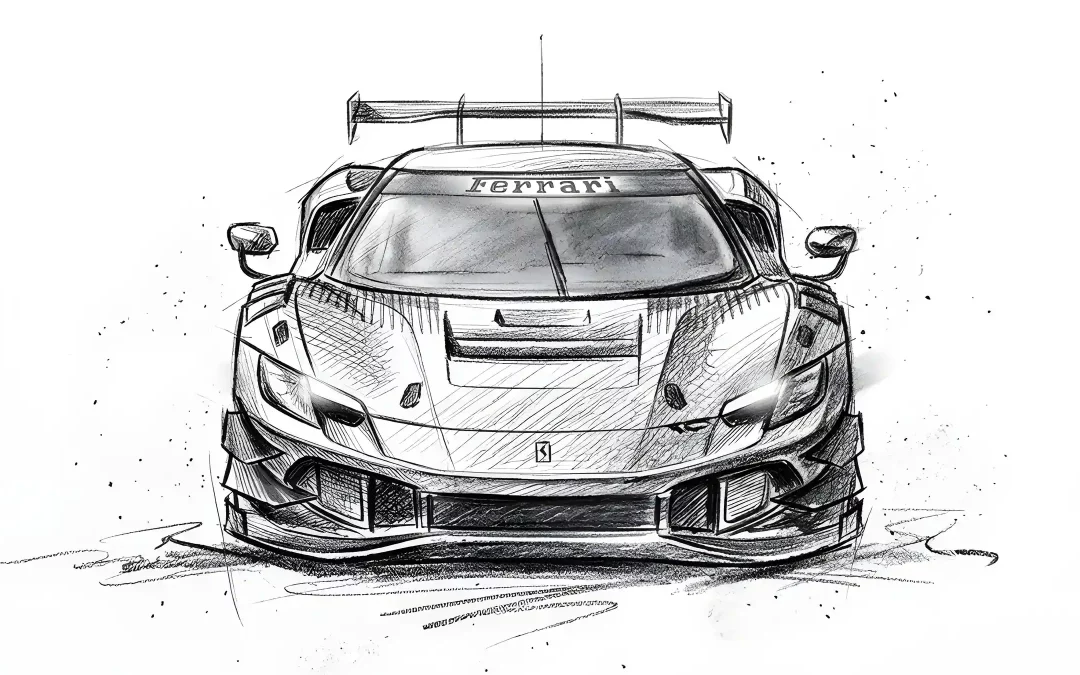
Italian design is traditionally shaped by the idea of “Form follows Emotion.” At Ferrari, however, this approach is subjected to the unrelenting logic of physics. Here, the rational precision of aerodynamics meets the emotional sensuality of sculpture.
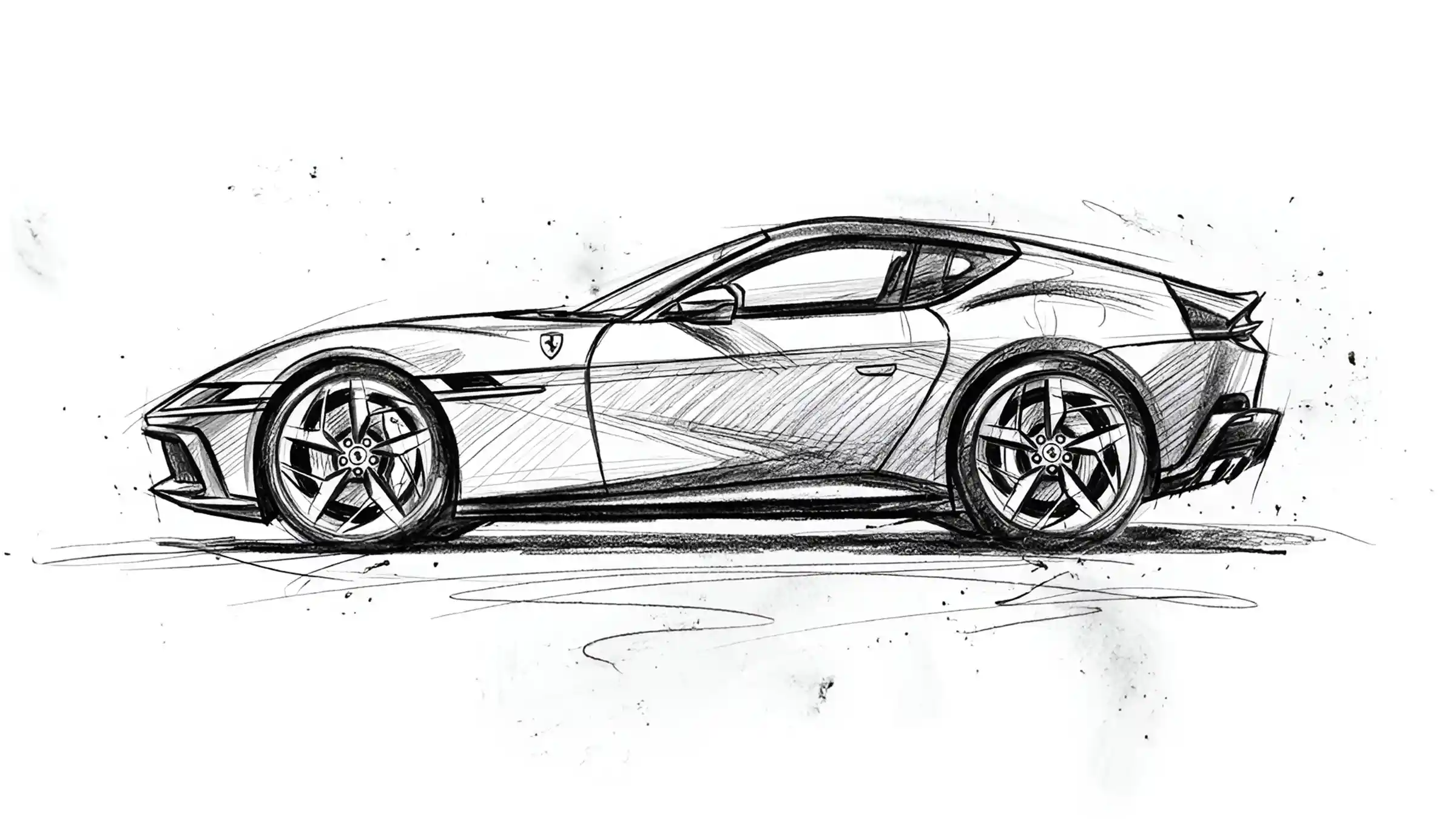
Ferrari serves two faces: the elegant Gran Turismos (GTs), whose soft, almost fluid lines evoke the “Dolce Vita,” and the radical mid-engine sports cars that radiate technical aggression and dominance. The brand’s archetype is that of the “Tamer.” The car is a predator—dangerous, irrational, but possessed of an intoxicating aesthetic.
Chief Designer Flavio Manzoni often speaks of “formal purity.” The curves of a Ferrari do not arise from mere gut feeling. They are the result of mathematical perfection (Class-A-Surfaces), where algorithms ensure that light flows across the bodywork without a single break. Yet, instead of staging aerodynamics as add-on parts (like large spoilers), they are subtly integrated into the form. An air intake becomes a sensual curve. This is design coherence in its purest form: the reduction to the essential, where technology reveals the soul.
Through the mathematical precision of Class-A-Surfaces, Ferrari ensures that light flows across the bodywork without a single interruption or fractured reflection. This pursuit of curvature continuity transforms the car into a living sculpture, where light glides over every surface as a singular, unbroken movement.
Positioning in Silence: Differentiation through Clarity
In a market where performance has become a commodity, Ferrari distinguishes itself psychologically from its competitors with surgical precision:
• The Engineer (Porsche): Porsche builds rational, everyday perfection. A tool of the highest precision.
• The Rebel (Lamborghini): Lamborghini seeks provocation. Angular, loud, visually brutal.
• The Aristocrat (Ferrari): Ferrari sits exactly in the middle. They sell neither a means of transport nor a mere shock element, but drama, history, and the myth of Formula 1.
Ferrari defends this positioning with an iron fist. Those who dilute the brand image – such as DJ Deadmau5, who wrapped his Ferrari with a pink cat meme (“Purrari”) – receive cease-and-desist orders. Even in the inevitable step into the SUV segment, Ferrari maintained its stance: the Purosangue is artificially limited to 20% of total production. Revenue growth must never cannibalize exclusivity.
To maintain its aura of absolute exclusivity, Ferrari limits its annual production to approximately 13,000 to 14,000 vehicles. This strategic restraint ensures that demand consistently outpaces supply, adhering to the founder’s mantra of always building “one car less than the market desires.”
The Weight of Craftsmanship in an Era of Algorithms
We live in an era where artificial intelligence and generative design can calculate perfect forms in seconds. Why does a hyper-technological company like Ferrari, which partners with giants like Bang & Olufsen for state-of-the-art systems, still cling to traditional clay modeling and hand-stitched leather?
The answer is human resonance. When everything is digital, perfect, and reproducible, the tactile and the analog become true luxury. The subtle imperfections of the human hand, the scent of the leather, the physical resistance of an aluminum shift paddle – these are anchors that ground a highly complex machine. Technology and AI optimize function (such as engine electronics or flow calculation), but craftsmanship gives the product its soul. It is this artisanal substance that turns a mere interface into a deep, meaningful experience.
Ferrari proves that true strength lies in reduction and focus. When you know who you are, you don’t have to please everyone. You only have to remain unforgettable to those for whom you exist.



International Freelance Creative Director & Digital Product Designer
Let's create something meaningful together
I love what I do - for me, design is less of a job and more of a calling. That's why I enjoy working with ambitious individuals and mid-sized businesses just as much as I do with global players. If you bring that same passion to your project, I’d love to hear from you. Let’s find out together how we can take your vision to the next level.