The Theory
We believe that professional experience is about collecting answers. In reality, it is often about losing the ability to ask the right questions. We mistake seriousness for competence. Yet, the highest form of competence is the clarity of a child.
The Dismantling
The corporate world has become sterile. Clients often view their brands as objects behind glass—distant, analytical, lifeless. They mistake risk management for brand leadership. In this process, substance is lost.
We build “drywall” brands because we fear the friction of genuine play. We follow “best practices” instead of exploring new ground. The result is mediocrity. A brand you cannot feel is not a brand. It is merely a file in a system.
Deep Dive
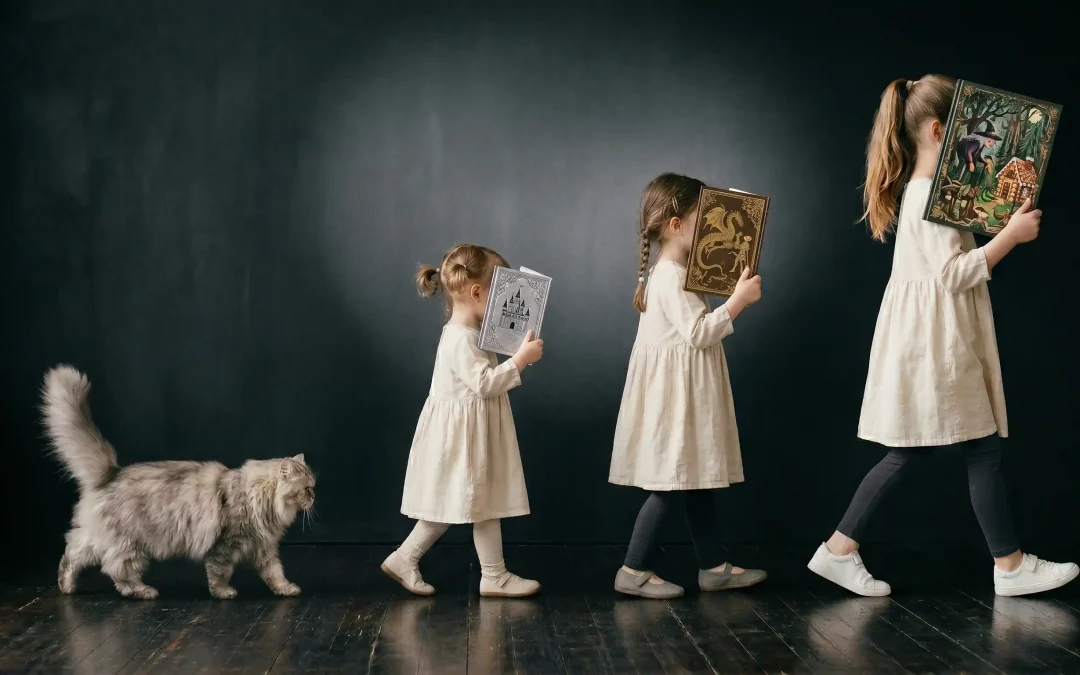
I have three daughters. Eight, five, and two years old. They are a daily lesson in radical honesty. When we build with Lego or draw together, I return to the origin of creation. Children know no guidelines. They only know the essence.
A child does not ask if an element is “on-brand.” They ask: “Why is it there?” If the answer is not convincing, the structure is torn down. This is the ultimate veto. Parenting teaches me that leadership is not about dominance, but about creating structures where freedom is possible.
School taught us to stay within the lines. As a Creative Director, I see it as my task to erase them. Play is not a pastime. It is the most efficient engine for innovation. Those who lose the joy of building lose the connection to the craft.
Shifting the Perspective
When I work for clients today, I use a “pedagogical lens” to make the brand tangible again. I shift the perspective through three levers:
1. Radical Simplification:
If a five-year-old does not understand the core of your brand, your strategy is noise, not a foundation. I force clients to strip away the complexity. We seek the substance that survives without jargon.
2. The Haptic Principle:
A brand should feel like a well-fitted Lego brick. Modular, logical, and satisfying to use. If the user interface does not invite “play,” it is a barrier, not a tool.
3. The Generational Contract:
We do not build for the next quarter. We build for the future of our children. This focus on long-term success changes every decision. A house meant to last 200 years requires materials that can age without losing value. The same applies to corporate design.
Conclusion
Children are not a distraction from work. They are the corrective for our professional blindness. Those who learn to see a brand through the eyes of a child recognize the cracks in the foundation before the building stands.
Wahre excellence requires the courage to play. Not out of levity, but out of deep respect for construction. Brands with depth demand more than decoration. They demand a soul.
Branding is not a coloring book. It is the construction of a house we want to inhabit for decades to come.


International Freelance Creative Director & Digital Product Designer
Let's create something meaningful together
I love what I do - for me, design is less of a job and more of a calling. That's why I enjoy working with ambitious individuals and mid-sized businesses just as much as I do with global players. If you bring that same passion to your project, I’d love to hear from you. Let’s find out together how we can take your vision to the next level.