From Function to Meaning
The Emotional and Ethical Evolution of Design
As brands grow, they often lose clarity. Strategy, product, user experience, and brand identity begin to drift apart imperceptibly. What remains is a patchwork of well-intentioned features and isolated design decisions. In these moments of complexity, it is essential to step back and examine the fundamental principles of our discipline. How do we design things that not only function but endure?
The 20th century left us with a powerful, almost religious dogma: “Form follows function.” The cool, analytical objectivity of the Bauhaus freed the world from unnecessary ornament. Over time, however, this principle was often misused as an excuse for soullessness. We created a world of gray boxes – highly functional, yet emotionally mute. But the evolution of design is not a straight line; it is a progressive understanding of what fundamentally makes us human.
The Rebellion of Emotion
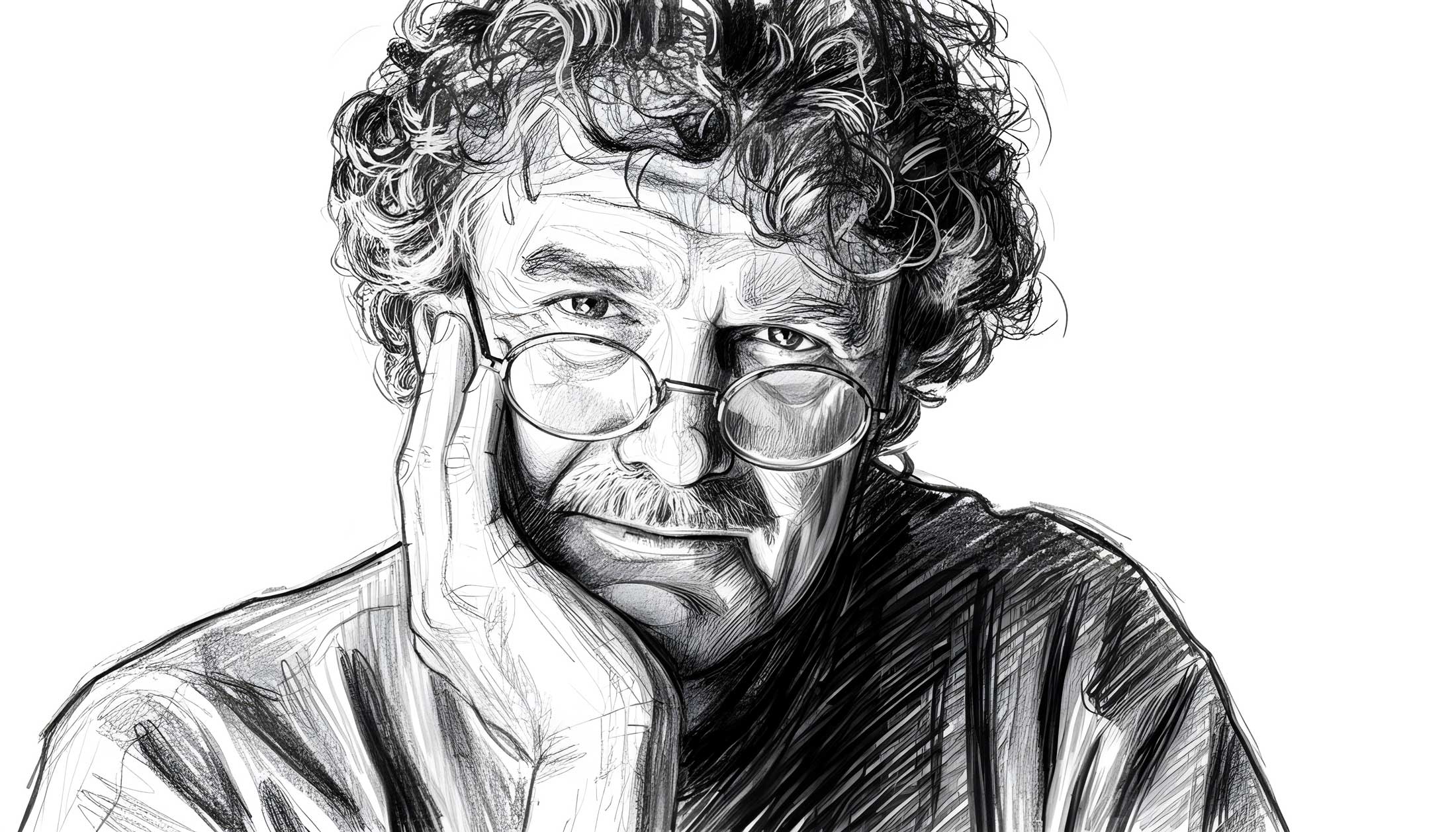
In the 1980s, this functionalism was disrupted by a new way of thinking, largely shaped by Hartmut Esslinger and his work for Apple. His philosophy, “Form follows emotion,” was a much-needed course correction. Esslinger recognized that humans are not purely rational machines. A product that fails to evoke emotion is essentially worthless to us, no matter how efficiently it operates.
Design became communication. Organic shapes, soft edges, and tactile surfaces made technology approachable. A design tells a story before we even use the object.
Yet, “Form follows emotion” was never a free pass for beautiful junk. Esslinger drew a sharp line between design and mere “styling.” If an object impresses visually but fails its purpose, it is just “lipstick on a pig.” Function remains the indispensable foundation. An emotional design makes a promise of quality and experience to the user. If the product breaks this promise in practice – like a beautiful lemon squeezer that sprays juice in every direction – positive expectation turns into frustration. And frustration is the end of brand loyalty.
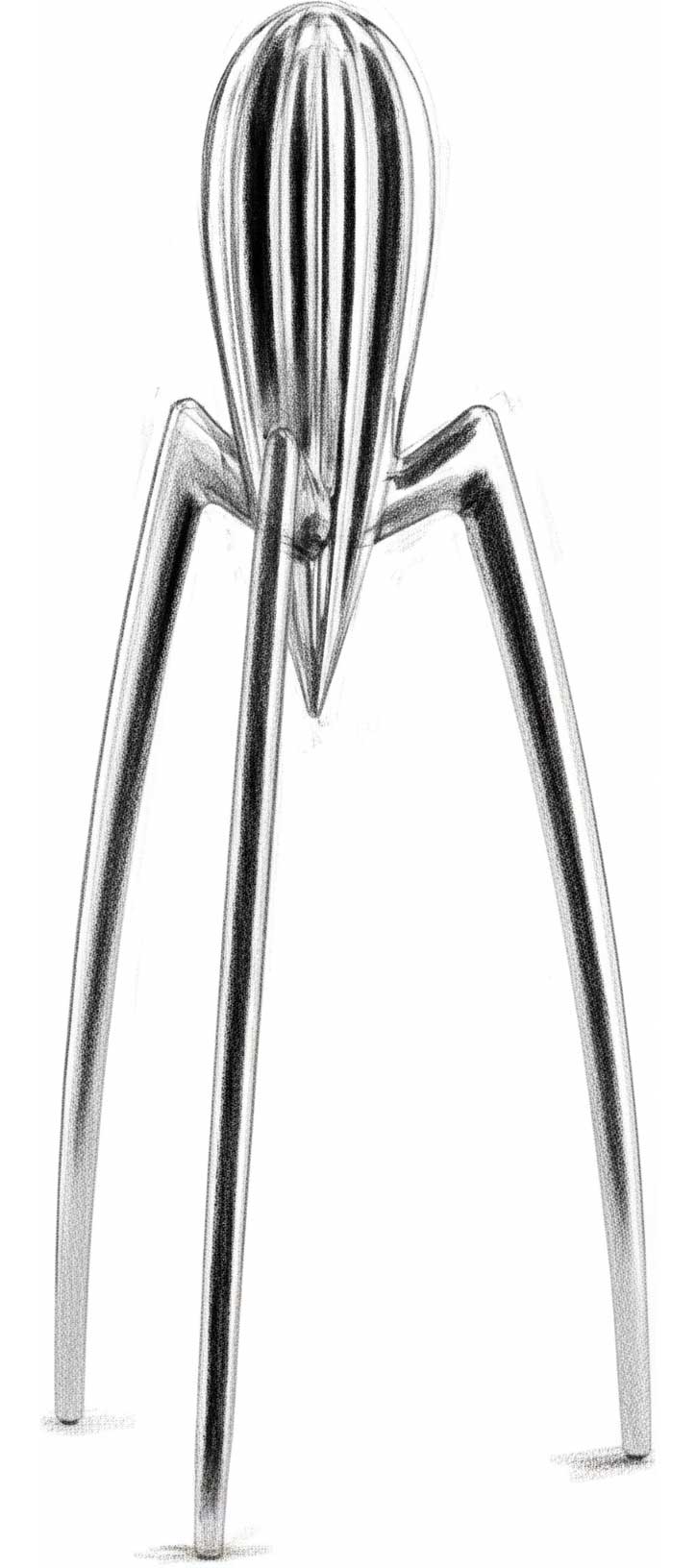
Design of the lemon press “Juicy Salif” by Philippe Starck
Starck reportedly sketched the idea on a napkin in a pizzeria while eating squid – which explains the spidery, almost alien shape.
- The aesthetic triumph:
It’s an icon. It’s on display at MoMA in New York and looks like a modern work of art on any kitchen counter. It instantly evokes emotions – curiosity, wonder, admiration.
- The functional nightmare:
Anyone who actually tries to squeeze a lemon with it quickly learns its pitfalls. The juice often runs down the legs, splashes everywhere, and the contraption is nowhere near as stable as it looks.
To Esslinger, ugly design was simply antisocial. It is a lack of empathy, a visual noise that signals to the user: We do not care about you.
Beauty as a Cognitive Function
Translating these thoughts into the present inevitably leads us to Stefan Sagmeister. He shifts the discussion away from pure industrial products toward a deep, almost scientific examination of aesthetics. His credo is simple: Beauty is a function.
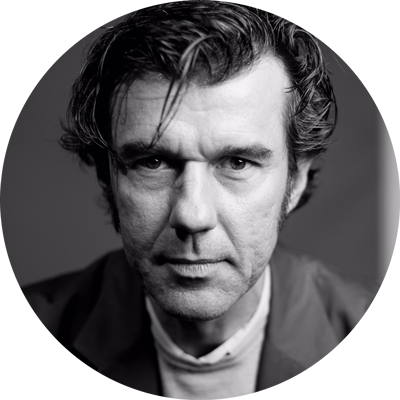
It is often argued that taste is subjective. What makes one person happy leaves another indifferent. But Sagmeister dismantles this excuse for mediocre design. He argues soundly that our perception of beauty is 90 percent based on universal, biological responses. Symmetry, specific proportions, natural materials, and harmonious colors signal safety and resources to our brains. They demonstrably trigger the release of dopamine.
Beauty is not a luxury or an afterthought. In environments designed without care, driven purely by utility, stress levels and error rates rise. Good, beautiful design promotes well-being, healing, and productivity. To ignore the objective laws of aesthetics is to design against human nature.
The Novelty Effect and the Pendulum of Trends
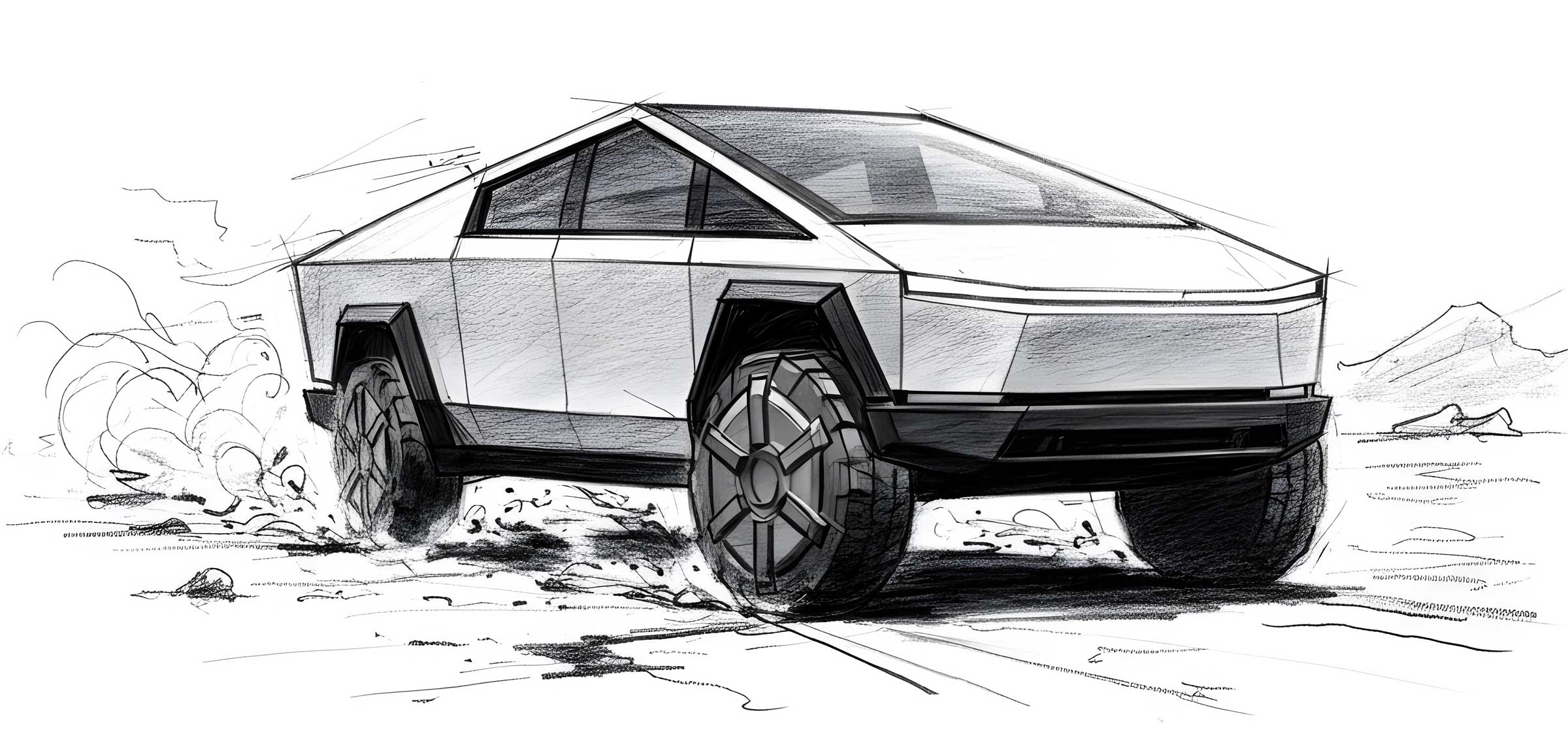
Why, then, are we suddenly fascinated by brutal, hard designs like the Tesla Cybertruck? If rounded corners mean safety and beauty, why does the industry repeatedly break these rules?
The answer lies in visual saturation. When perfection becomes ubiquitous, our brains eventually perceive it as invisible. The moment a completely contrary, angular design appears, our minds reward us for the novelty. This novelty effect suddenly makes hard edges appear precise, honest, or full of character.
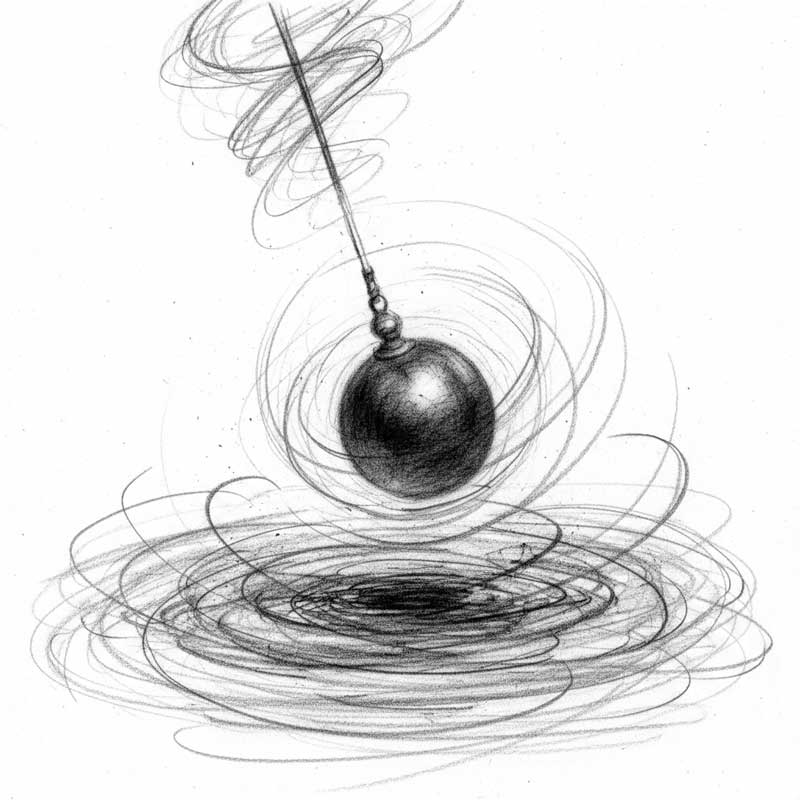
Yet, as designers, we must distinguish between short-term provocation and timeless integrity. A design intended solely to shock or project aggression shuns the social responsibility of making our environment more livable. Trends swing like a pendulum, but the fundamental human need for clarity and trust remains.
The Ethical Boundary
Nudging vs. Manipulation
Once we understand that design evokes emotion and influences our brains on a biological level, we inevitably enter ethically complex territory. We navigate a fine line between helpful nudging and toxic manipulation.
Where do we draw the line? The answer does not lie in a formula or the color of a button, but in the asymmetry of intent. A nudge in design is legitimate if it supports the user’s own conscious goals – for instance, when an app makes learning a language intuitive and motivating.

Manipulation, on the other hand – in the form of dark patterns – exploits our psychological blind spots to prioritize a company’s profit over the user’s autonomy. Hidden cancellation buttons, artificial scarcity, or infinite scroll feeds that steal our sleep. Such design sabotages free will. It leaves behind an emotional hangover and regret. And from the perspective of a sustainable brand strategy, manipulation is nothing more than design suicide in installments.
If you hack the trust of your users, you will inevitably lose them.
Form Follows Meaning
This forces us to expand the paradigm one last time.
Today, it is no longer enough for a product to simply function (Bauhaus).
It is no longer enough for it to feel good (Esslinger)
or bring visual happiness (Sagmeister).
Design has become a moral discipline. We must move beyond pure emotion and design for meaning. If a product entertains me in the moment of use but steals my time or harms the environment in the long run, cognitive dissonance arises. True aesthetics today emerge only from the coherence of strategic depth, flawless craftsmanship, and ethical responsibility. We have reached a point where the object itself fades into the background, and the transformation it enables for the user takes center stage.
I am convinced:
Brands with depth demand more than decoration. They demand a stance. And this stance can be distilled into a single, inescapable guiding principle:
On top: Good design must be respectful of free will and meaningful.


Let's create something meaningful together
I love what I do - for me, design is less of a job and more of a calling. That's why I enjoy working with ambitious individuals and mid-sized businesses just as much as I do with global players. If you bring that same passion to your project, I’d love to hear from you. Let’s find out together how we can take your vision to the next level.