
Essay — Creative Leadership
The Future Role of Creative Director
Why Proximity to Execution Is Not a Stage You Outgrow
You don't recognize a Creative Director by what he delegates. You recognize him by what he can still decide for himself.
What Is a Creative Director?
The short answer, before the longer essay begins.
A Creative Director is the senior authority over the visual, verbal, and strategic direction of a brand or campaign. He translates business objectives into a consistent brand language, leads design and content teams, and is accountable for creative quality across every touchpoint — often distinguished from an Art Director, who is primarily responsible for the visual execution of a single project.
That much is the definition. It isn't wrong — only incomplete. What it leaves out is the question of what that leadership capability actually depends on. That's what follows.
The Thesis
Proximity Is Not a Prerequisite for Leadership
In the creative industry, hands-on work is often treated as something you outgrow. In my experience, that assumption is wrong.
The common belief goes like this: as you rise, you hand off the tools. The junior designs, the senior briefs, the Creative Director decides — from a distance, with the overview, without getting his hands dirty. It sounds plausible. In my experience, it doesn't hold up.
A Creative Director who has fully left execution behind doesn't lose status right away. He loses judgment. He can still articulate what a brand needs to achieve. Eventually he can no longer assess whether a solution actually delivers it — because he has lost touch with the limits of the material: what a layout can carry under real conditions, where an interaction pattern breaks, what separates an interface that feels right from one that doesn't, often by a matter of milliseconds.
The Breakdown
Why the Industry Mistakes Distance for Leadership
The confusion has an understandable origin. It starts as an operational necessity and, over time, hardens into an identity.
Agency structures scale through delegation. A Creative Director responsible for several projects at once can't sit at the layout for each of them. Distance becomes an operational necessity — and over years, that necessity can calcify into an entire understanding of what leadership is. Leadership starts to mean: writing the brief, giving feedback, signing off on the result.
This isn't a case against division of labor. A good team carries exactly this kind of distribution, and no one person — myself included — can execute every detail of every project alone. What has stayed important to me is that my own practice never disappears entirely. That my sense for the craft doesn't come only from other people's reports, but from repeatedly testing, myself, against the material, whether a solution actually holds. Otherwise you end up judging work by how plausible its description sounds, rather than by the thing itself.
Naturalistic decision research, such as Gary Klein's studies of firefighters and emergency physicians, offers a useful parallel: experienced practitioners often make their best decisions not through systematic weighing of options, but through rapid pattern recognition — a form of judgment built exclusively through repeated, direct practice. Give up that practice, and the judgment rarely disappears overnight. It fades slowly, while the title on the business card keeps getting bigger.
The Deep Dive
What Only the Material Can Decide
Three projects, three different proofs of the same point.
During the global realignment of Audi's brand language, where I spent nine months working with Strichpunkt Design, the guiding idea was easy to state: the interface should become the brand. The real work started after that — in the question of how a design principle stays consistent across hundreds of screen sizes, market variants, and technical environments without losing its precision. Those answers don't emerge from a strategy deck. They emerge where someone actually holds the principle up against a layout and watches where it holds and where it breaks.
DFL Digital Sports presented a similar challenge under different conditions: tight timelines, an existing development team, live product launches. What mattered there wasn't the ability to present a concept, but the ability to carry it through to implementation together with engineering — fast, without losing quality along the way. That only works if you speak the language of implementation yourself.
3.1 AI as a Tool, Not a Substitute for Judgment
On the VIP app pilot for 1. FC Köln, another factor entered the picture: AI-assisted development, vibe coding, sped up technical execution considerably. What it didn't replace was the decision of how tradition and digital acceleration should relate to one another without the result feeling generic. No model makes that decision. It's made by someone who knows the material — visually, technically, culturally — from direct practice.
3.2 The Real Leverage
This is exactly where the real leverage sits in the relationship between creative leadership and artificial intelligence. AI accelerates production and improves consistency. It doesn't replace the quality of the underlying design system, the clarity of its structure, or the strategic intent behind it. A generic brief stays generic no matter how fast it gets translated into code. Direction remains a human task — and one you can only get right if you're still standing in the material yourself.
The Synthesis
Agency, Network, Freelancer — A Question of Fit
This proximity to execution also produces a more honest answer to a question many companies frame incorrectly.
Agency, network, or freelance Creative Director — which is the right choice? Large creative agencies offer something no individual can: interdisciplinary teams, legal safeguards, capacity for parallel large-scale projects. Networks scale globally when a project genuinely demands it. Both have their place, especially for complex, multi-track brand programs.
For many mid-sized and family-owned brands, though, the situation looks different. They don't need a twelve-person project organization for a question that is, at its core, strategic and creative: how should this brand show up so it actually reflects what it is? Here, the strength of a freelance Creative Director lies not in scale, but in reach — from the first strategic decision to the final pixel, with no handoff points where precision gets lost.
A Creative Director who wants to answer that question honestly still has to know execution firsthand. Not because delegation is wrong. But because a craft you've left behind is a craft you can no longer judge — only administer.
What Remains
Leadership that fully detaches from execution doesn't lose its authority right away. It loses its judgment first — and only notices when someone asks why a decision was made the way it was, and the answer consists only of a description, never of the thing itself.
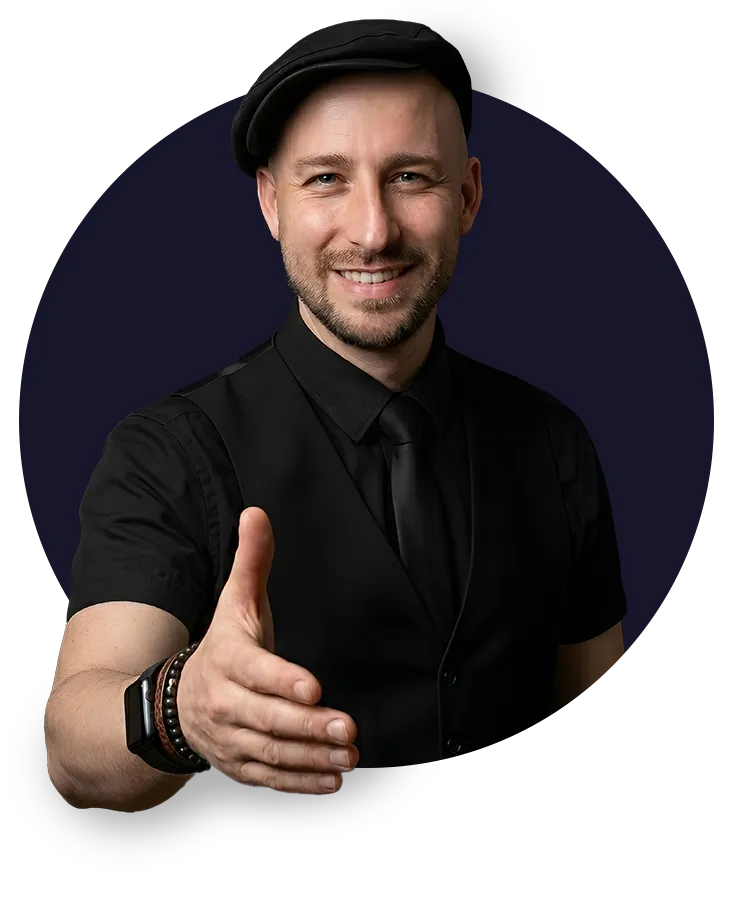
Christoph Gey is a freelance Creative Director and Digital Product Designer with over 15 years of experience at the intersection of brand leadership and digital products. His clients include Audi, Volvo, DFL Digital Sports, and A Bola. He is a member of the Art Directors Club.

About the Author
These essays are written by Christoph Gey, an independent Creative Director and Digital Product Designer based in Germany. With over 15 years of industry experience, his work focuses on the strategic intersection of premium branding and complex digital products.
Within these articles, he explores the deeper mechanics of design - ranging from brand strategy and user experience to neuroaesthetics. True to the philosophy that form follows meaning, these insights are crafted for decision-makers who believe that enduring brands demand substance, not just decoration.
MORE ESSAYS
Uncanny Valley – AI authenticity
AI-generated images can look flawless and still feel wrong. In a live A/B test with 3,680 page views, the version with real people earned 13% more clicks. This essay explains the Uncanny Valley in the age of generative AI and why brands now face a new question: not “Does it look real?” but “Is it real?”
Win every pitch
Fifteen years of helping agencies win their dream clients, distilled into 15 tips. Why winning shouldn’t be the goal, why a pitch is only a first meeting, and what really makes a client say yes.
The Liturgy of the Interface
Church bells and push notifications, confession and the Genius Bar: an essay on the psychological architecture shared by ritual and interface design and where the analogy breaks down.
Scarcity and luxury brand discipline
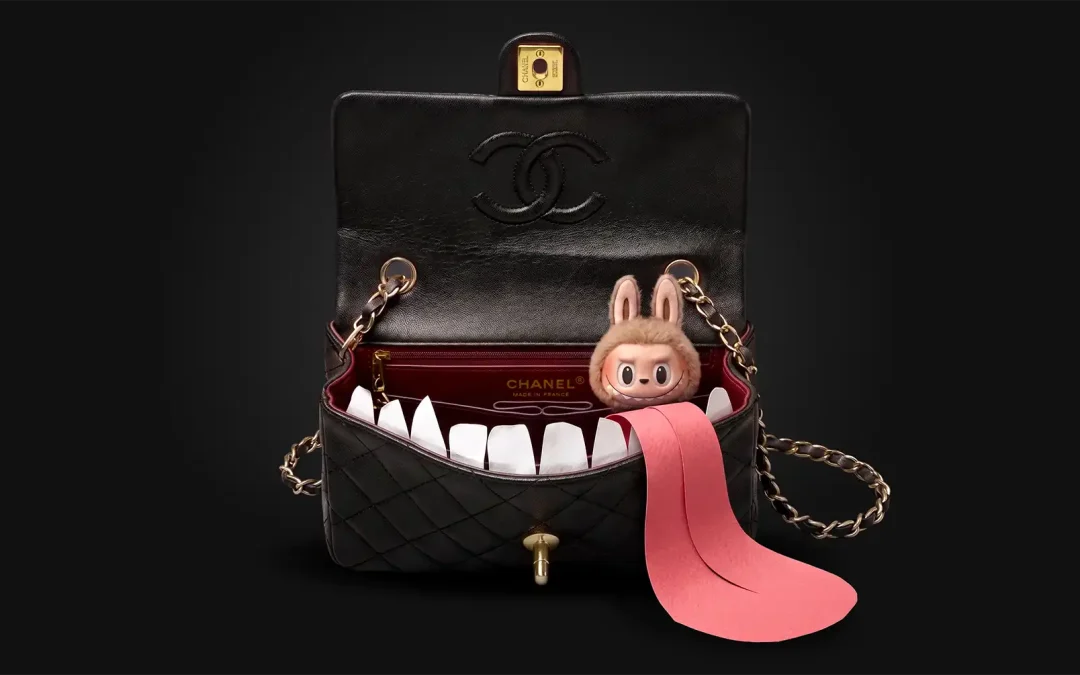
Scarcity isn’t one tactic – it’s three. From fake e-commerce timers to Labubu’s collapse to Chanel’s century-long price discipline, here’s what actually separates them.
SELECTED WORK
A curated selection of branding and digital product design projects. My work focuses on creating coherent brand experiences that bridge the gap between human perception and functional utility, helping organizations translate complex strategic goals into enduring digital products.


International Freelance Creative Director & Digital Product Designer
Let's create something meaningful together
I love what I do - for me, design is less of a job and more of a calling. That's why I enjoy working with ambitious individuals and mid-sized businesses just as much as I do with global players. If you bring that same passion to your project, I’d love to hear from you. Let’s find out together how we can take your vision to the next level.