
Essay — Brand Strategy
Luxury Brands - outlasting stormy (AI) seas
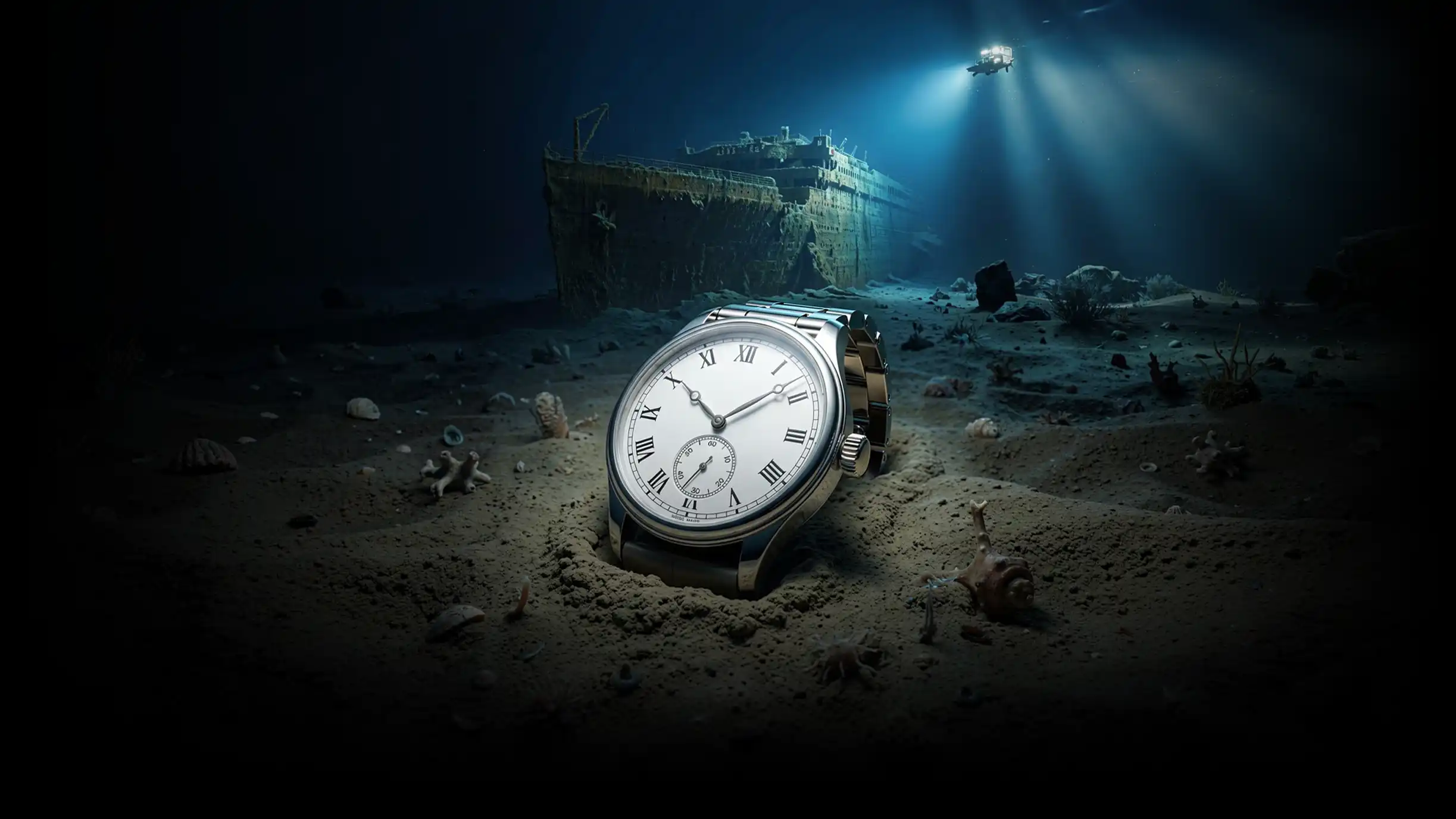
AI has made the perfect surface cheap. What remains valuable is what cannot be reproduced for free.
The Theorem
There is one sentence in this essay that outlasts the technology it is written about.
Luxury is not an image. Luxury is the veto against the shortcut.
For decades, the perfect rendering was itself a scarce good. A flawless product photograph required a photographer, a set, weeks of post-production. That scarcity was part of the price. Generative artificial intelligence has changed nothing about the substance of luxury — a Hermès scarf does not lose its value because a convincing image of it can now be produced in seconds. What has changed is something more precise: the reproducibility of the perfect surface is no longer scarce. And that forces every brand that has defined itself through its image to confront an uncomfortable question — what remains valuable once the depiction of value costs nothing?
The Erosion
When semblance itself becomes inflationary
It is not beauty that becomes inflationary. It is beauty's reproducibility.
The moment a perfect surface becomes recognisable as a shortcut, its effect changes. Fascination turns into scepticism — not for every viewer equally, but as a tendency that is increasingly hard to miss in a market that has long relied on the opposite.
At the same time, many luxury houses are sensing a quiet fatigue among their aspirational customers. Not because the products have declined, but because the visual language used to sell them suddenly feels arbitrary — replicable in milliseconds, indistinguishable from a thousand other prompts. When the surface no longer signals effort, the silent contract between brand and viewer breaks.
Three Roads to Interchangeability
The same pattern surfaces across the current brand landscape in three distinct forms.
- The synthetic campaign. Several established fashion houses have recently experimented with fully AI-generated campaign worlds. The reaction was less fascination than scepticism: instead of magic and craft, the brand suddenly signalled something else — the shortcut. The calculated effect reversed itself, and the brand lost its aura.
- Synthetic luxury. A brand can now generate product imagery, campaign world, and brand story in a matter of hours. On screen, the impression of an established luxury world emerges. But the moment product, service, interface, and actual experience fail to support that impression, the construction collapses. The brand has to prove its claim at every single touchpoint — brand experience as a stress test.
- Rebranding into sameness. Over the past years, many luxury houses have shifted their logos toward an interchangeable, sans-serif typographic standard ("blanding"). The problem is not simplicity itself — a well-reduced brand system can be extremely hard to imitate. The problem is reduction without an idea behind it. When differentiation shrinks to a handful of visual markers that carry no independent idea, those markers become easy to copy — not because they are simple, but because they are interchangeable.
The Deep Cut
Motion as choreography with restraint
AI can generate a moment. Design has to build a system.
AI can already generate motion — camera moves, material behaviour, entire sequences. That is no longer a future scenario, it is the present. The difference no longer lies in whether motion can be generated, but in how difficult it is to orchestrate motion as a consistent system across time — one logic running through every interaction a brand has with the world.
3.1 Inertia and weight
A cheap interface reacts instantly, digitally — without mass. A luxury interface simulates physical laws. When a menu glides open with a microscopic acceleration and a smooth deceleration, it creates the impression of mass, resistance, and physical plausibility.
3.2 Consistency over brilliance
A single impressive animation is easy to produce today. What is harder is the overarching logic — a hundred such moments across an entire product world, all following the same discipline. That takes editorial control. It takes people who understand how time feels, not just how it renders.
Luxury motion is not movement for movement's sake. It is choreography with restraint. An interface does not feel valuable because it animates a lot. It feels valuable when every movement has a reason.
The Quiet Ledger
Why we don't see care, but feel it
People rarely say why something feels right. But they can sense care.
That is the mechanism this essay circles around. No one consciously analyses the easing of a menu or the proportion of a whitespace. But the sum of a thousand invisible decisions produces an impression that cannot quite be reasoned out — only registered: someone put in the effort here. Or they didn't.
Craft was never just a question of quality. Craft was a communication channel — a brand spoke through the precision of its details to an audience that decoded that precision, consciously or unconsciously.
What is actually interesting about generative systems, then, is not that they produce poor results. It is that they dilute the signal by which people have always recognised care. Once perfection costs nothing, perfection stops being a reliable sign of effort.
Which is exactly why the proof of effort shifts to where reproduction alone is not enough — into the consistency of a motion sustained across a hundred moments, into the severity of a whitespace that forgives not a single wrong pixel.
The Workshop
The mathematics of emptiness
In an age of generative abundance, selection becomes the creative act itself.
It is a common misconception that minimalism is easy. The opposite is true. Generative systems gravitate toward visual density, because abundance is their native pattern. A generative system can hand you a thousand possibilities. The actual design achievement lies in not using nine hundred and ninety-nine of them.
And that selection follows a genuine mathematics — not in a figurative sense, but a literal one: spacing, rhythm, proportion, typography, hierarchy, pacing, anticipation, negative space. Every one of these sits in relation to the others. Large whitespace increases the sense of trust and calm — but only when the relationships between the few remaining elements are correct. Flat space alone is not minimalism. Flat space with the wrong proportions is simply emptiness.
That is exactly why reduction forgives no mistakes: a type size off by two pixels and the whole thing feels cheap; a hollow rationale for what was left out and the design reads as sterile rather than assured. Reduction raises the stakes on every single remaining element.
The Manifesto
Substance is everything that still gives a brand meaning when no one is looking at it. Semblance needs an audience. Substance holds up without one.
A generated image can produce a perfect impression. But its perfection alone proves no history, no craft, no experience behind it. It is semblance without trace.
The future of luxury does not belong to the brand with the most perfect image. It belongs to the brand whose value does not end at the image.
When anyone can produce the semblance, truth becomes luxury again.

About the Author
These essays are written by Christoph Gey, an independent Creative Director and Digital Product Designer based in Germany. With over 15 years of industry experience, his work focuses on the strategic intersection of premium branding and complex digital products.
Within these articles, he explores the deeper mechanics of design - ranging from brand strategy and user experience to neuroaesthetics. True to the philosophy that form follows meaning, these insights are crafted for decision-makers who believe that enduring brands demand substance, not just decoration.
MORE ESSAYS
Craft becomes luxury
Why does real craft grow more valuable, not less, in the age of generative AI? A practitioner’s case, backed by research on effort justification and the IKEA effect, for keeping the first line human and where AI genuinely earns its place in the process.
Architecture of wakefulness
Attention is the creative director’s most underrated weapon. An essay on sleepwalking through creative work and the discipline of never looking away.
Perception Architecture
Audience logic asks who someone is. Perception architecture asks what state they’re in and why that question changes everything about how digital products should be designed.
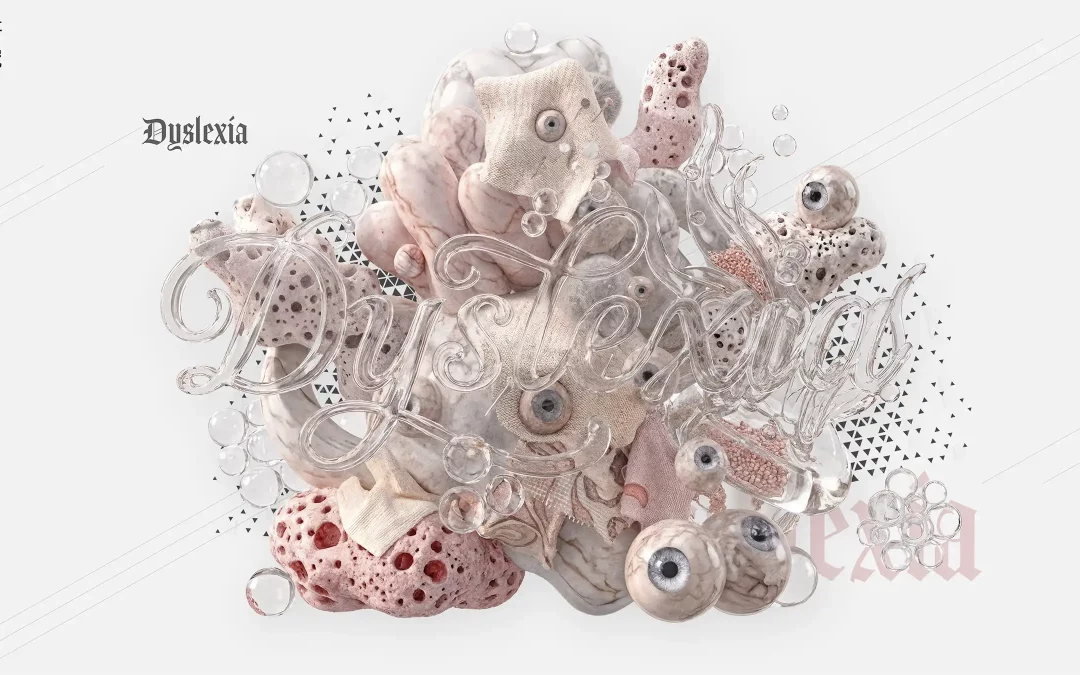
How to design for dyslexia?
How do you design digital products for people with dyslexia? An essay on typography, structure, and the neuroaesthetics of real accessibility.
SELECTED WORK
A curated selection of branding and digital product design projects. My work focuses on creating coherent brand experiences that bridge the gap between human perception and functional utility, helping organizations translate complex strategic goals into enduring digital products.


International Freelance Creative Director & Digital Product Designer
Let's create something meaningful together
I love what I do - for me, design is less of a job and more of a calling. That's why I enjoy working with ambitious individuals and mid-sized businesses just as much as I do with global players. If you bring that same passion to your project, I’d love to hear from you. Let’s find out together how we can take your vision to the next level.