
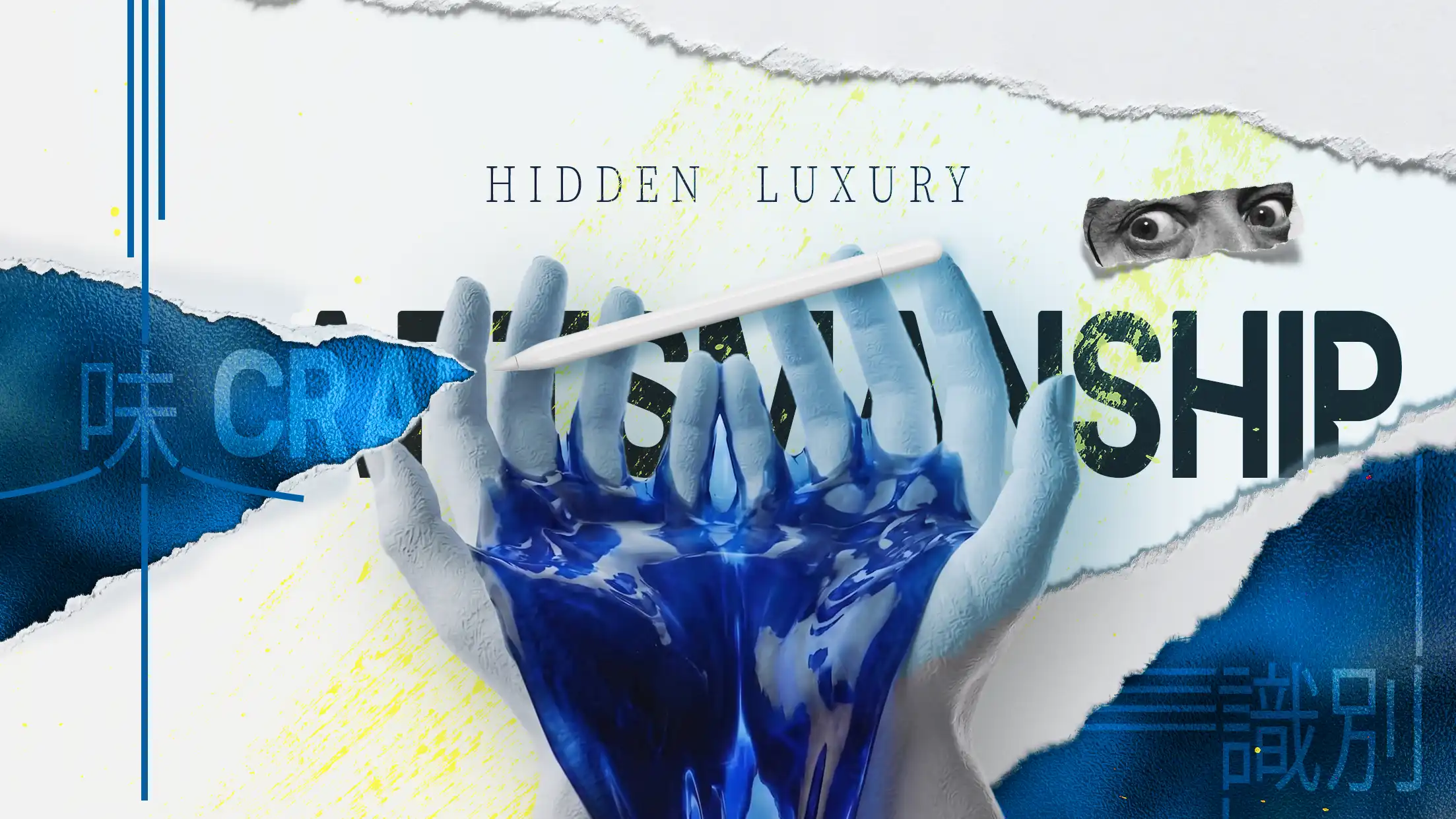
Essay — Design & Craft
Craft Becomes Luxury
Why AI makes it happen.
A practitioner's case for keeping the first line human.
The Theorem
AI does not just scale tools. It scales intention. That changes what we consider valuable.
The outcry against artificial intelligence sounds familiar. It echoes from the halls of industrialization and the first computer labs of the 1980s. Anyone who assumes this is just another verse of the old cultural pessimism song is missing something. This time it is not the tool being scaled. It is intent. When output becomes effortless, value shifts away from perfect form and toward the credibility of effort.
I have worked as a designer for more than fifteen years, and I use AI every day. Those two facts are not in conflict, but they do not explain each other either. That is what this essay is about: not AI as an enemy, but where it actually belongs in the process, and where it does not.
The Paranoia Echo
Every technological shift triggers the same wave of resistance. History says the panic rarely holds.
When mechanical looms replaced hand-weaving, people mourned the loss of a fabric's soul. When desktop publishing replaced the scalpel and the wax pen, typographers predicted the end of their craft.
History taught us something else happened. The tools changed, but human intention stayed the bottleneck. The computer automated execution, not thought.
AI breaks that continuity in one place. It does not just simulate mechanics, it synthesizes the result, without the human experience that used to come with it. It delivers a polished surface in seconds. Industrial manufacturing made plastic cheap and universal, and turned wood, stone and handwork into luxury. AI is doing the same to visuals. It turns polish into a commodity, and the visible trace of a human hand becomes the new status symbol.
The Deep Look
Why does real craft grow more valuable, not less, in the age of generative models?
2.1 Effort and Value
We value things not only for how they look, but for the energy that went into making them. Psychologists Aronson and Mills showed this back in 1959: the harder it was to gain access to something, the higher people rated it afterward, a pattern known as effort justification. Applied to design, effortlessness lowers perceived value rather than raising it.
2.2 The Hunger for Touch
A screen has no texture. It is a frictionless surface. The more daily life happens behind glass, the stronger the craving grows for physical resistance: heavy natural paper, the smell of ink, the fine asymmetry of a hand-drawn line.
2.3 The Honesty of the Scar
An AI image is statistically smooth, and that is exactly why it feels soulless. It knows no slip of the hand, no material fatigue. The small deviation is visible proof that a human was present. Recent consumer research on what researchers call "crumpled esthetics" confirms this directly: irregular, slightly imperfect packaging is not read as a flaw. It is read as a sign of human contact.
2.4 An Honest Status Report
To be fair: not everything AI produces today is good. In UX and UI work especially, the AI hand is often visible at first glance. Certain layout patterns, certain compositions repeat, regardless of the tool. Researchers have a name for this: mode collapse, the tendency of generative models to settle into a narrow slice of possible outcomes instead of the full range. Studies also show outputs from different AI systems converging toward each other the more they train on similar data, and even on each other's output. What disappears first is the rare, the idiosyncratic, the personal.
This is not a footnote. It supports the argument: right now, the machine still delivers the average, not a signature. That will likely change. It has not changed yet.
The Workshop
Theory is easy. Here is where AI actually sits in my process, and where it does not.
Practice- The sparring-partner rule. At the start of a project, I use AI as a conversation partner, not a draftsman. Two rules apply: never share client data, and never take what the AI says as simply true. Within those limits, it is genuinely useful. It surfaces unfamiliar angles and helps sort through large amounts of information fast.
- The characters. One method I value most: I turn a target-audience persona into a "real" character and talk to them. Not as a gimmick, but as a diagnostic tool. In that dialogue, you notice fast where a concept breaks down, where an audience would walk away, where a message does not land, problems you would otherwise only find in client feedback or user testing.
- Sketch, not final product. Later in the process, AI becomes fast supporting work: placeholder images later replaced by a real photoshoot, but useful for an early impression. Mockups that show how a finished logo looks in context. All of it is a sketchbook. None of it is a final deliverable. I would never let AI take over a project entirely and design purely by prompt. The quality does not hold up over time.
What I deliberately do not do in this early phase: let AI draw the first layouts. At the start of a project, the human hand matters most. I do not want my layouts to look like everyone else's. I want them to look like my client. That happens faster when I sit down at the tools myself, not when I write a prompt.
The Synthesis
This is not the old song played louder. The competition itself has changed.
For the first time, we are not competing with a machine that lifts faster. We are competing with a system that simulates faster.
What is made purely digitally, without human resistance, loses value. What remains is friction, not as a romantic idea but as a way of working: AI at the start and in support, the human hand where it counts. Behavioral economists know the reverse case as the IKEA effect: people rate outcomes significantly higher when they helped make them, but only when the work is actually finished. In one well-known study, people bid noticeably more for furniture they had assembled themselves than for an identical, pre-assembled version; the effect disappeared for anything left incomplete.
Craft in design shifts, this way, from a method of production to a stance.
The Manifest
AI will push out the mediocre. Much of that is deserved. But it does not replace the guiding hand of a master. At best, it sharpens where that hand is needed, and where it is not.
I use it as an assistant, as support, as a sparring partner. Not as a replacement for creativity. Algorithms produce images. People create meaning.
Sources
- Aronson, E., & Mills, J. (1959). The effect of severity of initiation on liking for a group. Journal of Abnormal and Social Psychology.
- Norton, M. I., Mochon, D., & Ariely, D. (2012). The IKEA effect: When labor leads to love. Journal of Consumer Psychology, 22(3), 453–460.
- Peck, J., & Childers, T. L. (2003). Individual differences in haptic information processing: The "Need for Touch" scale. Journal of Consumer Research, 30(3), 430–442.
- Bommasani, R. et al. (2022). On the Opportunities and Risks of Foundation Models. NeurIPS.
- Shumailov, I. et al. (2024). AI models collapse when trained on recursively generated data. Nature.

About the Author
These essays are written by Christoph Gey, an independent Creative Director and Digital Product Designer based in Germany. With over 15 years of industry experience, his work focuses on the strategic intersection of premium branding and complex digital products.
Within these articles, he explores the deeper mechanics of design - ranging from brand strategy and user experience to neuroaesthetics. True to the philosophy that form follows meaning, these insights are crafted for decision-makers who believe that enduring brands demand substance, not just decoration.
MORE ESSAYS

Uncanny Valley – AI authenticity
AI-generated images can look flawless and still feel wrong. In a live A/B test with 3,680 page views, the version with real people earned 13% more clicks. This essay explains the Uncanny Valley in the age of generative AI and why brands now face a new question: not “Does it look real?” but “Is it real?”
Win every pitch
Fifteen years of helping agencies win their dream clients, distilled into 15 tips. Why winning shouldn’t be the goal, why a pitch is only a first meeting, and what really makes a client say yes.
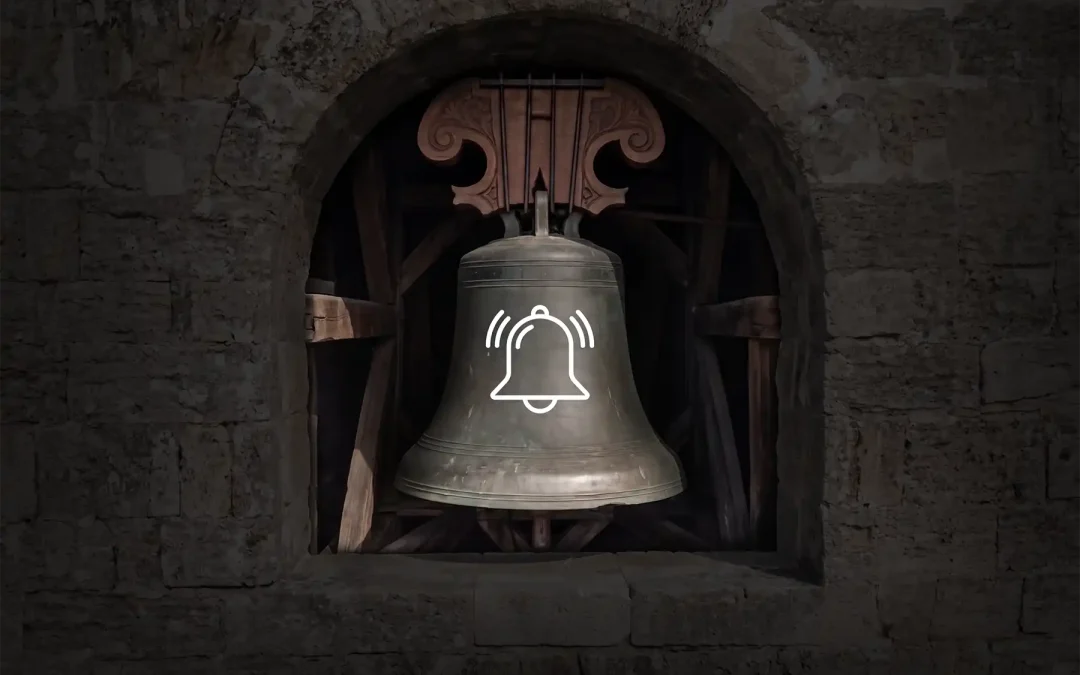
The Liturgy of the Interface
Church bells and push notifications, confession and the Genius Bar: an essay on the psychological architecture shared by ritual and interface design and where the analogy breaks down.
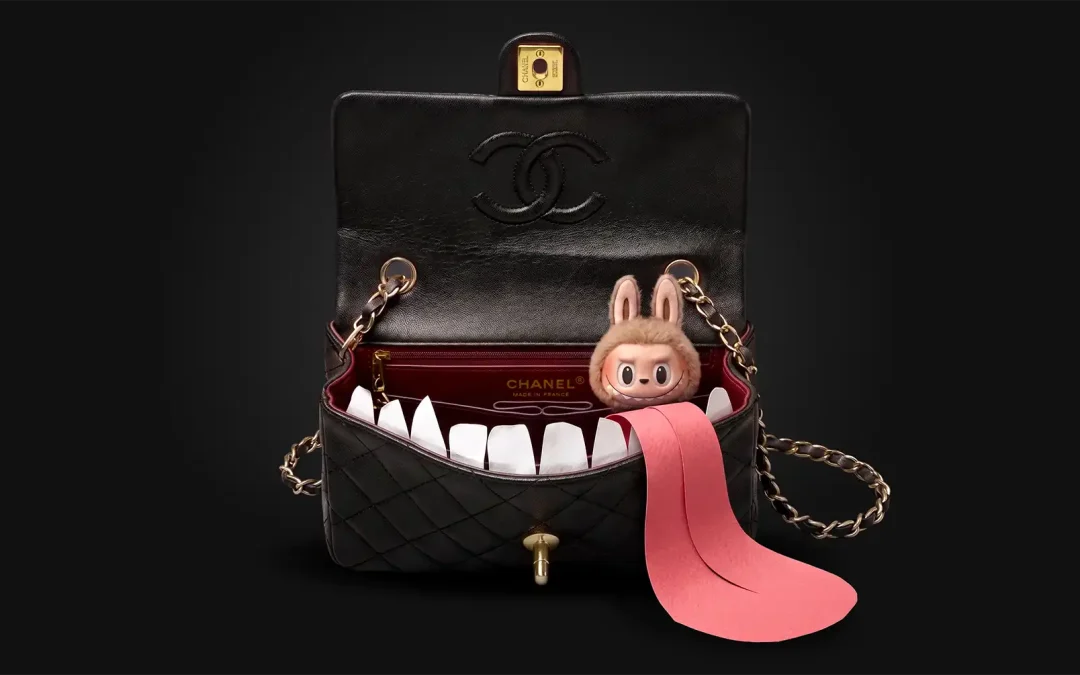
Scarcity and luxury brand discipline
Scarcity isn’t one tactic – it’s three. From fake e-commerce timers to Labubu’s collapse to Chanel’s century-long price discipline, here’s what actually separates them.
SELECTED WORK
A curated selection of branding and digital product design projects. My work focuses on creating coherent brand experiences that bridge the gap between human perception and functional utility, helping organizations translate complex strategic goals into enduring digital products.


International Freelance Creative Director & Digital Product Designer
Let's create something meaningful together
I love what I do - for me, design is less of a job and more of a calling. That's why I enjoy working with ambitious individuals and mid-sized businesses just as much as I do with global players. If you bring that same passion to your project, I’d love to hear from you. Let’s find out together how we can take your vision to the next level.