
Essay — Design Systems
The Architecture of Desire
What Louis Vuitton Teaches Systems Designers
A house that never had to choose between reach and exclusivity, because it never treated them as opposites.
The Paradox
Why Visibility Should Have Killed This Brand
Louis Vuitton is everywhere, and by every rule of luxury, that should have destroyed it.
The house appears on runways, in video games, in music videos, in airports, in museums, and on millions of screens at once. By the traditional logic of luxury, none of this should work. Luxury lives on distance, on scarcity, on controlled access. The more visible and widespread a brand becomes, the more ordinary it is supposed to feel.
Louis Vuitton is the counterexample. The house never tried to trade exclusivity against visibility, weighing one against the other. It decoupled them entirely.
That is not a marketing trick. It is systems design under extreme conditions, and it is exactly why the brand rewards anyone who treats brands or digital products not as a collection of individual moves, but as systems.
A good system does not prevent change. It defines what may change without the identity breaking. Over decades, Louis Vuitton has built exactly this kind of architecture: the visible layer can shift radically while the invisible layer stays under tight control. Collaborations arrive and depart. Colors rotate. Artists reinterpret the codes. Digital experiences appear and disappear. Craft, origin, access, price, and consequence remain part of the foundation regardless. The surface is allowed to change. The foundation is not. That is the lesson worth taking from here.
The Foundation
Where Authority Actually Comes From
Two mechanisms explain why the house earned trust long before it earned admiration.
1.1 The Problem Came First
In 1858, Louis Vuitton founded his own workshop as a trunk maker. The starting point was not a myth of luxury but a concrete problem: travel was changing. The railway and the steamship made mobility faster and more widespread, and luggage had to work differently. Vuitton's flat trunk, built from coated Trianon canvas, could be stacked, and it suited the new world of travel far better than the rounded trunks common at the time.
The interesting lesson is not the trunk. It is the sequence. The problem came first, then the solution, then the reputation. The same sequence matters for digital products. Authority rarely comes from claiming it; it comes from a system that solves a real problem more consistently than anyone else. The product is the first proof. The brand is simply what remembers it.
1.2 The Monogram Is Not a Logo
In 1896, the Louis Vuitton monogram appeared, partly as a response to growing counterfeiting. Today it functions less like a mark of ownership and more like a component library: a stable visual vocabulary that allows countless interpretations without losing its origin. Murakami could rework the codes entirely. Kusama could reinterpret them again. Colors, materials, contexts, and cultural references can all shift, and the frame stays recognizable regardless.
A weak design system mostly defines what must never change. A strong one defines what is allowed to change without the identity coming apart, and that distinction holds for a luxury house exactly as it holds for a digital product family with a hundred screens.
The Interface
Where the Brand Actually Lives
Two further mechanisms show how the house designs perception, not just product.
2.1 The Store Is an Interface
A Louis Vuitton store is not a neutral container for products. It is an interface. Architecture, material, light, art, distance, and movement decide how the brand feels before anyone touches a product. The flagship stores shaped by Peter Marino function less as sales floors than as physical brand experiences.
The principle is not limited to luxury retail. A good digital interface does the same work. Typography sets rhythm. White space sets distance. Animation sets anticipation. Materiality sets worth. Onboarding sets trust. In digital work, we call this user experience. In physical space, we call it architecture. At the core, it is the same discipline: designing not only what people see, but what they perceive. The store is not a container for the brand. It is part of it.
2.2 Culture Before Conversion
The house's most interesting digital moves rarely try to move a product toward a sale as efficiently as possible. They try to earn cultural relevance instead: a trophy case for League of Legends, augmented reality experiences, limited sneaker drops, collaborations with artists and cultural figures. The brand shows up where culture is being made, not only where purchase intent is being measured.
That is a different model from classic performance marketing. Call it cultural gravity: the house is not only buying attention, it is building a place people choose to visit on their own. For product teams, that raises a real question. Are you building touchpoints that convert, or touchpoints that create belonging? Both can matter, but they are rarely the same system.
The Edges
Where the System Is Tested
The final two mechanisms explain how the house manages scarcity, and the arrival of generative tools.
3.1 Scarcity as Architecture
Exclusivity does not come from a high price alone. It comes from control: control over distribution, over access, over price, over where and how a product appears. Where scarcity is designed deliberately, waiting itself becomes part of the brand.
The point is not to minimize visibility. The opposite is true. Louis Vuitton can make its entry-level products visible worldwide while keeping access to its most exclusive tiers tightly limited. The brand's visibility can keep growing without every layer of the brand becoming equally accessible. That architectural separation is what the entire model rests on, and a digital product can follow the same principle. Not every user needs the same access. Not every feature needs to be visible immediately. Not every interaction needs to carry equal weight.
3.2 When Perfection Becomes Free
Generative AI is changing a fundamental part of the design economy. Images can appear in seconds. Variations cost almost nothing. Perfect surfaces become endlessly reproducible. So what happens to luxury once perfection stops costing anything?
Perhaps the opposite of what most people expect. The valuable thing does not become more perfect. It becomes harder to imitate: material, time, origin, craft, experience, consequence. A hand-stitched leather handle becomes more interesting than a perfect rendering of one, not because handwork is automatically better, but because it carries something generative systems cannot simulate: a history of time, material, and human decision.
That is not only a lesson for luxury brands. It may be one possible future for design itself.
The Foundation Question
Each of these mechanisms looks, on its own, like a single branding decision. Together, they add up to something else: an architecture. Louis Vuitton never tried to protect exclusivity through low visibility. It learned to separate visibility from access instead. The surface is allowed to change. The foundation stays under control. Collaborations can arrive, codes can be reinterpreted, technologies can shift, cultural contexts can move — but certain things stay fixed: craft, origin, access, price, consequence. That separation is what makes the system resilient, and it is exactly where the connection to design systems lies. A system is not strong because nothing is allowed to change. It is strong because it knows which changes it can survive.
We often talk about brand consistency as if that were the goal. It might be the wrong question. The more useful one is: what has to stay constant so that change becomes possible at all? A brand does not need to look identical everywhere. A product does not need to standardize every interaction. A design system does not need to prevent every deviation. It needs to know where deviation is allowed, and where it is not.
Louis Vuitton, in that sense, is less an example of luxury than an example of controlled change. It can be culturally omnipresent without opening every door. It can change without dissolving. It can earn attention without losing its value to that attention.
Before the next campaign, the next feature, or the next AI iteration gets decided, one question is usually enough: is this changing the surface, or the foundation?

About the Author
These essays are written by Christoph Gey, an independent Creative Director and Digital Product Designer based in Germany. With over 15 years of industry experience, his work focuses on the strategic intersection of premium branding and complex digital products.
Within these articles, he explores the deeper mechanics of design - ranging from brand strategy and user experience to neuroaesthetics. True to the philosophy that form follows meaning, these insights are crafted for decision-makers who believe that enduring brands demand substance, not just decoration.
MORE ESSAYS
Win every pitch
Fifteen years of helping agencies win their dream clients, distilled into 15 tips. Why winning shouldn’t be the goal, why a pitch is only a first meeting, and what really makes a client say yes.

The Liturgy of the Interface
Church bells and push notifications, confession and the Genius Bar: an essay on the psychological architecture shared by ritual and interface design and where the analogy breaks down.

Scarcity and luxury brand discipline
Scarcity isn’t one tactic – it’s three. From fake e-commerce timers to Labubu’s collapse to Chanel’s century-long price discipline, here’s what actually separates them.
Luxury Brands – outlasting stormy (AI) seas
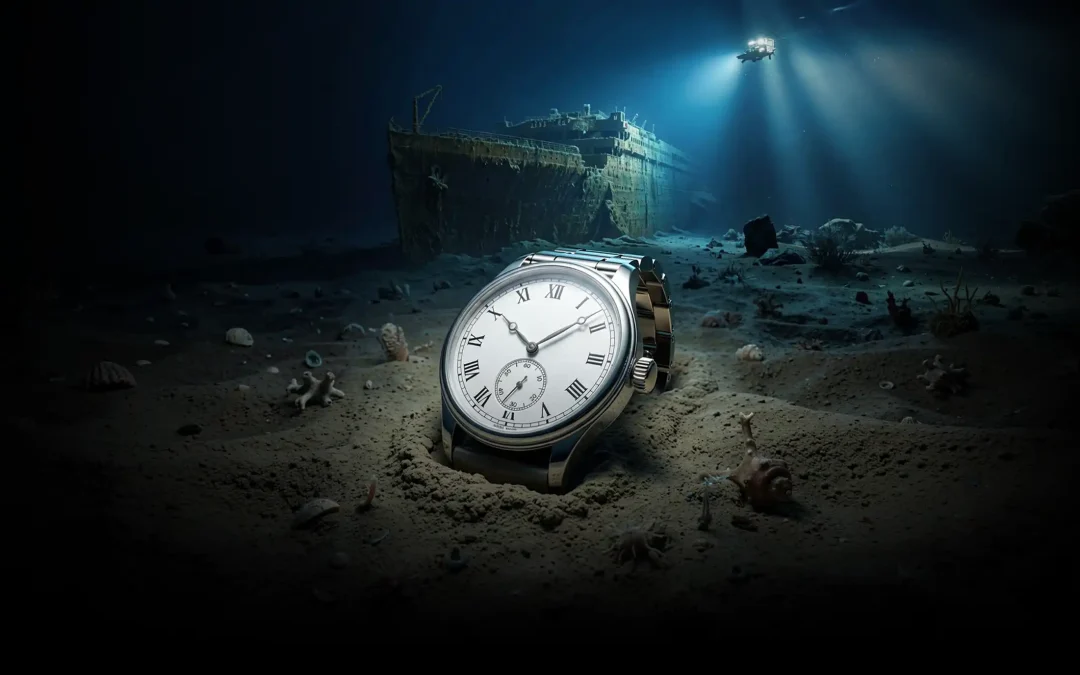
AI has made visual perfection cheap. And that creates a strange problem for luxury brands. For decades, the perfect image was scarce. It required photographers, locations, sets, retouching, craft, time. Now the image itself can be generated in seconds. So what happens when the surface of luxury is no longer scarce?
SELECTED WORK
A curated selection of branding and digital product design projects. My work focuses on creating coherent brand experiences that bridge the gap between human perception and functional utility, helping organizations translate complex strategic goals into enduring digital products.


International Freelance Creative Director & Digital Product Designer
Let's create something meaningful together
I love what I do - for me, design is less of a job and more of a calling. That's why I enjoy working with ambitious individuals and mid-sized businesses just as much as I do with global players. If you bring that same passion to your project, I’d love to hear from you. Let’s find out together how we can take your vision to the next level.