
Essay — Creative Practice
Ego and Self-Confidence
Why the two belong together — and why both are dangerous.
There is a moment in creative work I know well: you sit in front of a briefing, have an idea that feels right — and simultaneously don't know whether to trust it. Not because the idea is weak. But because you're not sure you have it for the right reasons.
As a Creative Director, you move between these two poles every day. Self-confidence is the precondition for good work. Ego is its greatest trap. Both carry the same handwriting.
Too Deep Inside —
and Too Far Outside
A leading Portuguese sports publisher asked me for an external perspective on their digital presence. What I had to manage most carefully wasn't the design.
The internal team was strong — technically skilled, familiar with the system, loyal to the brand. And that was precisely the problem. They were thinking in constraints that no longer existed. Rules that once made sense and simply stayed.
I didn't discard the existing corporate design. I reread it. The brand's historical foundation was there — it was just buried. I uncovered it, sharpened the storytelling, renewed the visual language. What I had to weigh most carefully wasn't the design. It was the tone.
The team took my layouts and made them machine-readable. That required adjustments — spacing, structures, components. I could have insisted that every pixel remain unchanged. That would have been ego. Instead, I handed it over. That was the right decision.
Wanting to Shine
Is Not a Concept
A campaign for a global technology manufacturer. I wanted to do it properly. Wanted to show what I was capable of.
I developed ideas, discarded them, developed new ones — and in doing so, drifted further and further from the actual task. What I produced convinced no one. Myself included.
A junior designer on the team had a different approach. Less developed, but with a perspective that was fresh — unburdened by the pressure I had built up for myself. I could have overlooked that idea. Could have dismissed it as immature. Instead, we developed it together, refined it professionally, brought it to market.
That was not a moment of defeat. It was one of the clearest moments of my work: the best idea in the room has no age and no hierarchy. A Creative Director who doesn't understand this is not a director — they are a blockade.
The Silence
That Remains
There is also the other story. The one that echoes longer.
As a junior, I was involved in developing a brand identity. My draft felt strong — at the time, and even more so in retrospect. But it was talked to death. Not for substantive reasons, but because I didn't defend it. I didn't yet have the self-confidence to stand behind an idea when others pushed back.
Years later, the client changed direction. The new course was strikingly close to my old draft. I noted it without saying it aloud. It was not a triumph — it was a signal.
Since then I know: self-confidence cannot be retrofitted. It emerges in the moment you are willing to stand behind an idea — and bear the consequences if you turn out to be wrong. Not before. Not through experience alone. But through the decision to do it anyway.
The Difference
Ego protects its own idea. Self-confidence protects the best idea — regardless of who had it.
That is the difference. It sounds simple. It isn't.

About the Author
These essays are written by Christoph Gey, an independent Creative Director and Digital Product Designer based in Germany. With over 15 years of industry experience, his work focuses on the strategic intersection of premium branding and complex digital products.
Within these articles, he explores the deeper mechanics of design - ranging from brand strategy and user experience to neuroaesthetics. True to the philosophy that form follows meaning, these insights are crafted for decision-makers who believe that enduring brands demand substance, not just decoration.
MORE ESSAYS
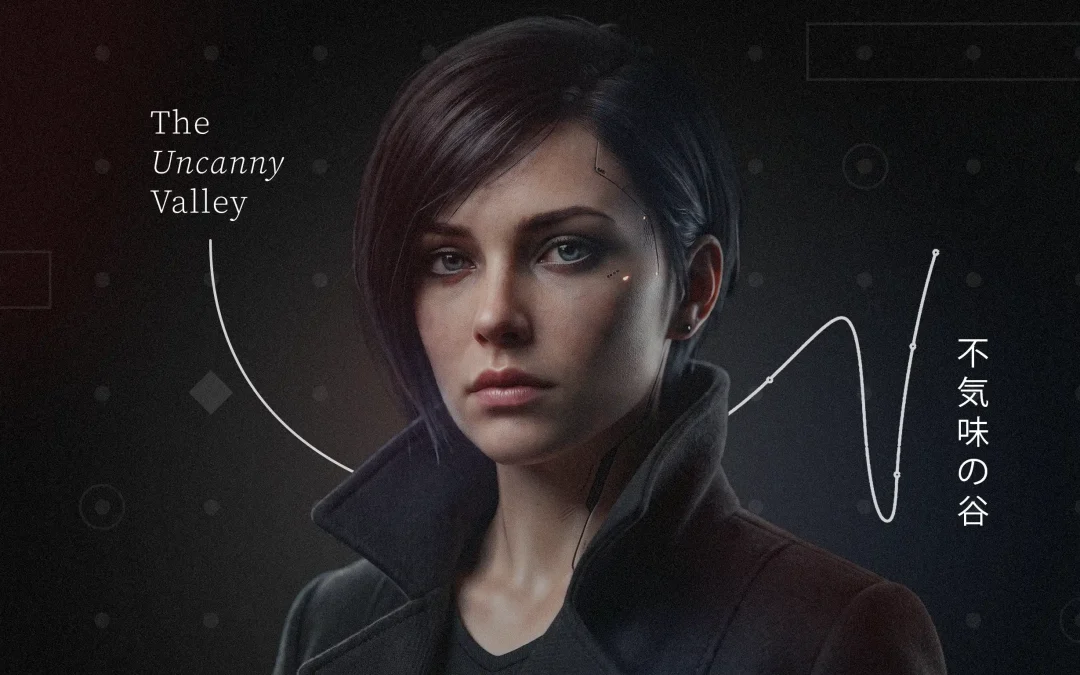
Uncanny Valley – AI authenticity
AI-generated images can look flawless and still feel wrong. In a live A/B test with 3,680 page views, the version with real people earned 13% more clicks. This essay explains the Uncanny Valley in the age of generative AI and why brands now face a new question: not “Does it look real?” but “Is it real?”
Win every pitch
Fifteen years of helping agencies win their dream clients, distilled into 15 tips. Why winning shouldn’t be the goal, why a pitch is only a first meeting, and what really makes a client say yes.
The Liturgy of the Interface
Church bells and push notifications, confession and the Genius Bar: an essay on the psychological architecture shared by ritual and interface design and where the analogy breaks down.
SELECTED WORK
A curated selection of branding and digital product design projects. My work focuses on creating coherent brand experiences that bridge the gap between human perception and functional utility, helping organizations translate complex strategic goals into enduring digital products.


International Freelance Creative Director & Digital Product Designer
Let's create something meaningful together
I love what I do - for me, design is less of a job and more of a calling. That's why I enjoy working with ambitious individuals and mid-sized businesses just as much as I do with global players. If you bring that same passion to your project, I’d love to hear from you. Let’s find out together how we can take your vision to the next level.