
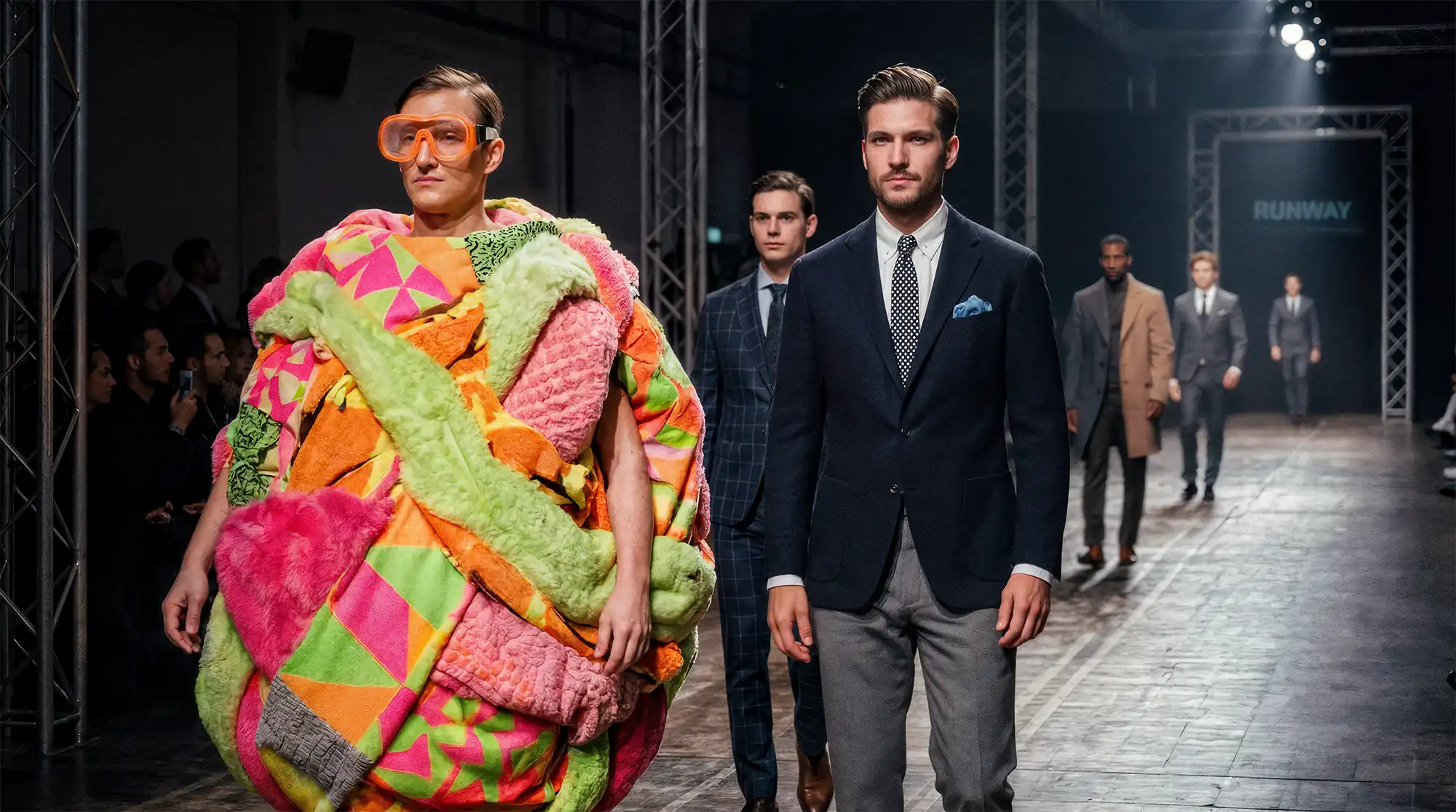
Essay — Design & Culture
The Mosaic of Perception
An Anatomy of Taste
Taste is not a matter of opinion. It is a system — built from biology, culture, class, and training. And only at the very end: from the individual.
"There's no accounting for taste." The phrase is a reflex of retreat. It sounds like tolerance, but it means surrender — the quiet refusal to take aesthetic judgment seriously at all.
And yet taste may be the most complex thing a person can develop. Not because it is so mysterious. But because it reveals so much.
The Foundation
Before culture begins, the body begins.
Certain proportions are perceived as balanced across cultures. Symmetry signals neurological stability. Rhythm and pattern recognition are not inventions of civilisation — they are standard equipment for perception. Perceptual psychology has documented this well.
This is not an argument for biological determinism. It is an argument for honesty. Everything else builds on this foundation.
The Frame of Reference
No taste emerges in a vacuum. It is always situated — in a language, an era, a space.
One example: in twentieth-century graphic design, the Swiss Style poster tradition stood for credibility — grid, grotesque typefaces, reduction. At the same time, American advertising agencies produced illustration, mixed typography and emotional saturation as markers of professionalism. Two cultures, two entirely different aesthetic signatures — both internally consistent, both locally self-evident.
Those who don't know this argue about taste. Those who do recognise they are arguing about context.
The ability to read aesthetic codes, to understand where they come from — and then to decide whether to follow them or deliberately break with them.
The Invisible Layering
Taste is also a social document. It registers where we come from and where we want to go.
Background, education and the environment in which we grew up — all of this sets coordinates long before we make a conscious decision. What is perceived as "high quality" is often less an aesthetic question than one of belonging. A signal to the group. A quiet reassurance: I am one of you.
The zeitgeist amplifies this. Media, platforms, social resonance — they define in real time what currently counts as stylistically assured. Those who don't reflect on this believe they have a taste of their own. In reality, they have one on lease.
And the first step toward distinguishing between taste as reflex and taste as attitude.
The Trained Eye —
and Its Limits
Can taste be developed? Yes. But it's worth understanding what that actually means.
4.1 The Density of Reference
Anyone who immerses themselves deeply in a field — automotive design, typography, architecture, wine — develops a new form of perception. No longer just "beautiful" or "ugly". Instead: proportions, material quality, the historical reference embedded in a form, the craft decision made three steps before the visible result.
That is the difference between the layperson and the expert: not intelligence, but the density of reference. Those who have seen more, see more.
4.2 The Trap of Expertise
But here lies a trap. Because expertise produces judgment — and judgment seduces toward certainty. Refined taste tends to regard itself as the correct one. It mistakes an informed opinion for an objective standard.
Developed taste, therefore, does not mean liking the right things. It means being able to justify your own judgments — and knowing that even those justifications are anchored somewhere in the cultural.
The Wilful Self
And yet the individual remains the gravitational centre.
Personal history, emotional attachments, psychological disposition — all of this shapes what genuinely resonates. An expert can know every standard of their field by heart and still choose the aesthetic that swims against the current. Not out of ignorance, but out of conviction.
Knowing what the rules are — and then departing from them with confidence. That is not a weakness of the model. It is the point at which taste ceases to be explainable.
And perhaps that is its greatest strength.
Not a Destination.
A Practice.
One might object: is the pursuit of "good taste" not itself just another form of social distinction? Who decides which justifications count — and whose references serve as the standard?
The objection is valid. Any model of taste that implies hierarchy carries within it the risk of elitism. The expert who lectures the layperson. The connoisseur who holds the zeitgeist in contempt. That is not insight — it is only a more refined reflex.
What remains when you strip that away?
Good taste is not a state one reaches. It is a practice — an ongoing dialogue between what the world declares to be valuable and what one has come to recognise as fitting through one's own experience. It is the result of attention. Of knowledge that accumulates over time. Of the courage to set one's own standards — and to defend them without turning them into dogma.
And it always contains a remainder that cannot be fully reduced to culture, education or biography. This remainder we can describe, but never fully explain. It reminds us that taste is always larger than the model we use to try to capture it.
Taste is not decoration. It is attitude made visible.

About the Author
These essays are written by Christoph Gey, an independent Creative Director and Digital Product Designer based in Germany. With over 15 years of industry experience, his work focuses on the strategic intersection of premium branding and complex digital products.
Within these articles, he explores the deeper mechanics of design - ranging from brand strategy and user experience to neuroaesthetics. True to the philosophy that form follows meaning, these insights are crafted for decision-makers who believe that enduring brands demand substance, not just decoration.
MORE ESSAYS
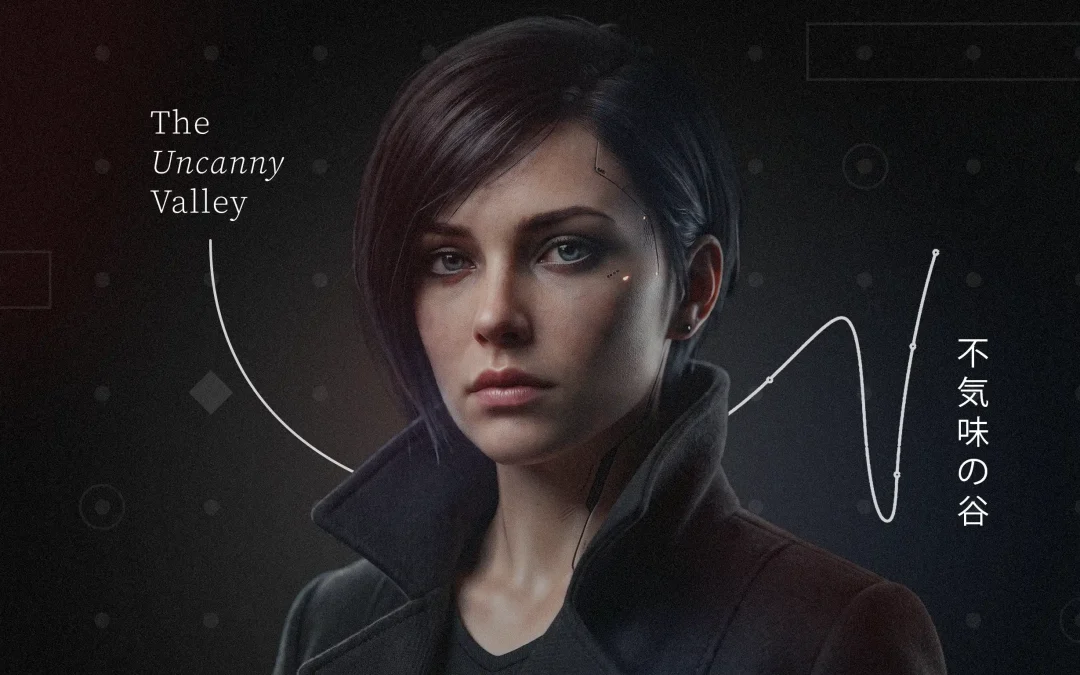
Uncanny Valley – AI authenticity
AI-generated images can look flawless and still feel wrong. In a live A/B test with 3,680 page views, the version with real people earned 13% more clicks. This essay explains the Uncanny Valley in the age of generative AI and why brands now face a new question: not “Does it look real?” but “Is it real?”
Win every pitch
Fifteen years of helping agencies win their dream clients, distilled into 15 tips. Why winning shouldn’t be the goal, why a pitch is only a first meeting, and what really makes a client say yes.

The Liturgy of the Interface
Church bells and push notifications, confession and the Genius Bar: an essay on the psychological architecture shared by ritual and interface design and where the analogy breaks down.

Scarcity and luxury brand discipline
Scarcity isn’t one tactic – it’s three. From fake e-commerce timers to Labubu’s collapse to Chanel’s century-long price discipline, here’s what actually separates them.
Louis Vuitton Design Systems
Louis Vuitton never chose between reach and exclusivity. Iit built a system that separates the two. A design-systems lesson for brand and product teams.
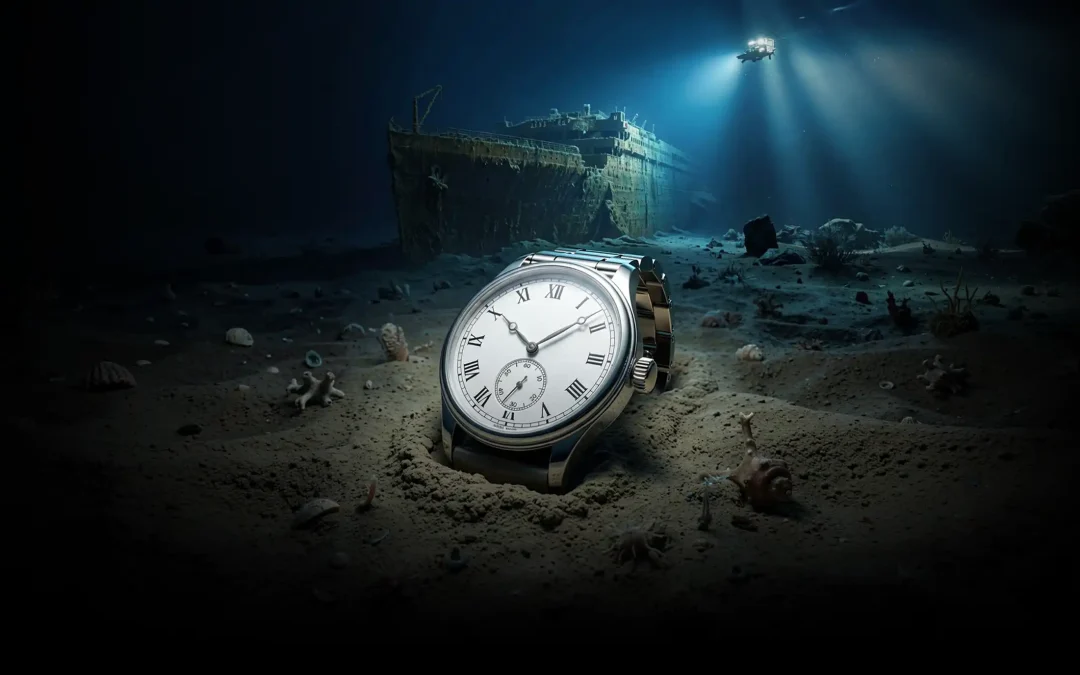
Luxury Brands – outlasting stormy (AI) seas
AI has made visual perfection cheap. And that creates a strange problem for luxury brands. For decades, the perfect image was scarce. It required photographers, locations, sets, retouching, craft, time. Now the image itself can be generated in seconds. So what happens when the surface of luxury is no longer scarce?
SELECTED WORK
A curated selection of branding and digital product design projects. My work focuses on creating coherent brand experiences that bridge the gap between human perception and functional utility, helping organizations translate complex strategic goals into enduring digital products.





International Freelance Creative Director & Digital Product Designer
Let's create something meaningful together
I love what I do - for me, design is less of a job and more of a calling. That's why I enjoy working with ambitious individuals and mid-sized businesses just as much as I do with global players. If you bring that same passion to your project, I’d love to hear from you. Let’s find out together how we can take your vision to the next level.