

Essay — Creative Direction
Obsession as a
Creative Director
Why the shortest path to mastery is rarely the most direct one.
Theorem:
The Diagnosis
A student approaches a master and asks: "How long will it take me to become a master swordsmith?"
The master doesn't look up. "Forty years," he says.
The student recoils. "No — you misunderstand me. I will sacrifice everything for this. I will focus, commit, and do nothing else."
The master looks at him now, directly. "In that case," he says, "it will take eighty years."
I didn't understand this story for a long time. Perhaps because I was the student myself.
Not out of ignorance. But because focus feels so correct. You dig in. You study the facts, analyse, research. You work. And work feels like progress — even when you're moving in circles.
The master doesn't double the time as punishment. He makes a diagnosis. But which one exactly — that only becomes clear when you've run into the wall yourself.
Deconstruction:
The Grammar of the World
At Strichpunkt, working on Audi, Jochen Rädeker gave us a strange assignment.
For every digital design principle, we had to find an equivalent in the physical world. Light refraction. The reflection of safety vests at night. The panel gap tolerances in automotive construction.
No workshop gimmick. A method.
What he taught us wasn't to look broader. It was more precise than that: the world contains a visual grammar that already exists — long before we start building screens. Whoever can read that grammar doesn't think in design solutions. They think in principles. And principles transfer.
That's the difference between someone who designs well and someone who knows why they do what they do.
Immersion:
The Transfer
Years later, a project for StepStone. I was brought in to redesign the Recruiting Area — the interface through which recruiters sift their candidates daily. Functional. Sober. No obvious space for design.
3.1 Tinder → Recruiting
TransferAt the time, everyone was talking about Tinder. About the swipe gesture. About the ease with which a single movement sorted decisions.
I thought: what if recruiters had that same feeling?
Not because I admired Tinder. But because I'd noticed that a gesture from a completely different world — dating app, mass market, entertainment — contained a principle transferable to a professional interface. Decision efficiency through physical movement. That's not coincidence. That's transfer.
3.2 Mac Pro → Paper Dispenser
TransferOr the Zewa paper dispenser. A dull plastic container I was asked to stage. Nothing in the design context offered an obvious angle.
At the same time, Apple released the new Mac Pro. That staging — the reveal, the interior, the product as architecture. I asked myself: what if the paper dispenser did the same?
Not to copy Apple. But because I recognised in a product staging from an entirely different category a principle that fit a completely different object.
Synthesis:
The Rhythm
What I've learned — not once, but anew with every project — is a rhythm. Not a secret.
You dig in. You study, analyse, research. And then, at some point, you let go. You turn away. You let the mind wander — to a showerhead, to a shadow, to a phrase in conversation that suddenly sounds like a headline.
That moment of letting go isn't weakness. It's part of the method.
The student's mistake isn't a failure of will. It's a failure of the model. He believes mastery is linear: more input, more output, faster results. But mastery is a network. It emerges through connections you didn't plan. Through the capacity to see a design principle in a showerhead. Through the song that sounds like a client — and shows you what they should look like.
Focus is one prerequisite. Openness is the other. Abandon either one and you don't arrive faster. You arrive with less.
Creative perception
has no office hours.
That's not romanticism — it's an observation about how this work actually functions.
It means an unusual colour combination on the street stays with you. A turn of phrase in conversation suddenly sounds like copy. Trade magazines sit out during evenings off — not out of obligation, but because you can't help it.
But it also means: the children who interrupt. The concert where you play drums instead of thinking about projects. The book with nothing to do with design that changes everything anyway.
That's not a contradiction to focus. It's its necessary counterpart — the part without which focus becomes a tunnel.
The master didn't work more than the student.
He learned when to stop.

About the Author
These essays are written by Christoph Gey, an independent Creative Director and Digital Product Designer based in Germany. With over 15 years of industry experience, his work focuses on the strategic intersection of premium branding and complex digital products.
Within these articles, he explores the deeper mechanics of design - ranging from brand strategy and user experience to neuroaesthetics. True to the philosophy that form follows meaning, these insights are crafted for decision-makers who believe that enduring brands demand substance, not just decoration.
MORE ESSAYS
Uncanny Valley – AI authenticity
AI-generated images can look flawless and still feel wrong. In a live A/B test with 3,680 page views, the version with real people earned 13% more clicks. This essay explains the Uncanny Valley in the age of generative AI and why brands now face a new question: not “Does it look real?” but “Is it real?”
Win every pitch
Fifteen years of helping agencies win their dream clients, distilled into 15 tips. Why winning shouldn’t be the goal, why a pitch is only a first meeting, and what really makes a client say yes.
The Liturgy of the Interface
Church bells and push notifications, confession and the Genius Bar: an essay on the psychological architecture shared by ritual and interface design and where the analogy breaks down.

Scarcity and luxury brand discipline
Scarcity isn’t one tactic – it’s three. From fake e-commerce timers to Labubu’s collapse to Chanel’s century-long price discipline, here’s what actually separates them.
Louis Vuitton Design Systems
Louis Vuitton never chose between reach and exclusivity. Iit built a system that separates the two. A design-systems lesson for brand and product teams.
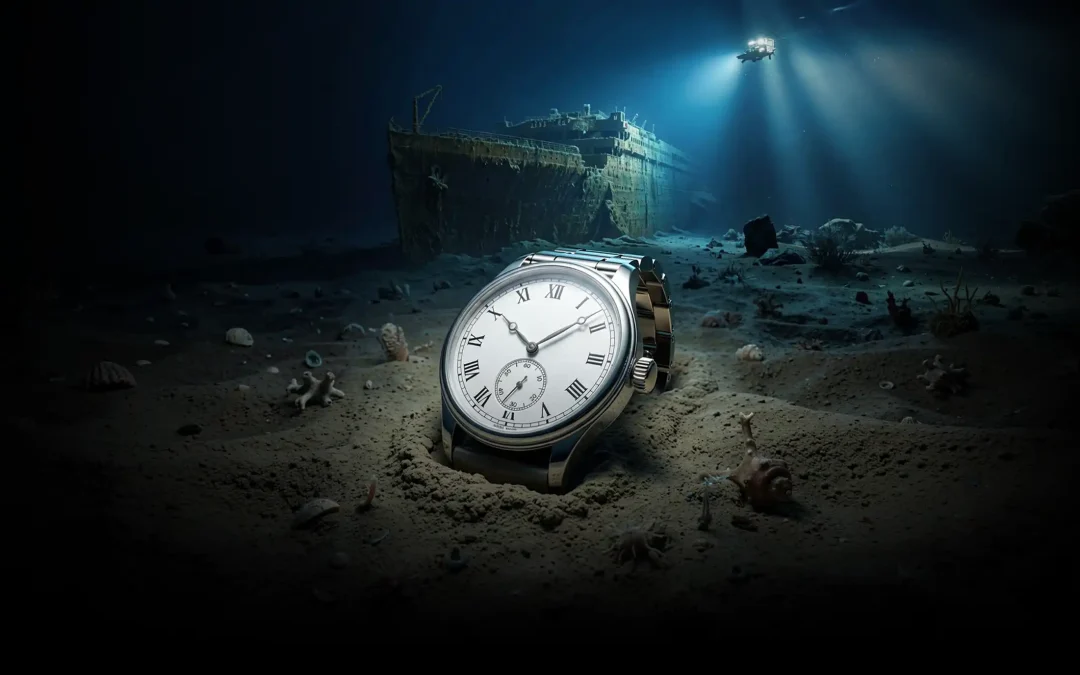
Luxury Brands – outlasting stormy (AI) seas
AI has made visual perfection cheap. And that creates a strange problem for luxury brands. For decades, the perfect image was scarce. It required photographers, locations, sets, retouching, craft, time. Now the image itself can be generated in seconds. So what happens when the surface of luxury is no longer scarce?
SELECTED WORK
A curated selection of branding and digital product design projects. My work focuses on creating coherent brand experiences that bridge the gap between human perception and functional utility, helping organizations translate complex strategic goals into enduring digital products.



International Freelance Creative Director & Digital Product Designer
Let's create something meaningful together
I love what I do - for me, design is less of a job and more of a calling. That's why I enjoy working with ambitious individuals and mid-sized businesses just as much as I do with global players. If you bring that same passion to your project, I’d love to hear from you. Let’s find out together how we can take your vision to the next level.