
Essay — Creative Practice
The Laboratory
of Freedom
Why creativity demands the courage to not know yet.
Creativity is not a gift. It is a decision — and one that most people never make.
Not because they lack talent. Because they lack permission. The permission to be wrong. To be unfinished. To follow a thought before knowing where it leads.
The Prison We
Build Ourselves
In agencies, corporations, creative teams worldwide, the same pattern repeats.
The brief arrives with the answer already embedded in the question. The first sketch is expected to be close to final. Experimentation is tolerated in theory and punished in practice.
The result is not bad work. It is predictable work. Safe, competent, invisible.
Premature certainty — the decision that the direction is set before the terrain has been surveyed. It feels like confidence. It is the opposite.
No Net.
No Fallback.
Every project I take on begins the same way: I don't know where it leads. Not approximately. Not yet.
I am open to all directions and try to arrive without prejudice. There is a phrase I keep coming back to: if all you have is a hammer, every problem looks like a nail. But if you carry several tools, you first have to understand where the problem actually is. That takes time. It requires sitting with uncertainty long enough to let the problem speak.
The deeper you work into a project, the more clearly you see what it needs to succeed. That clarity doesn't arrive at the beginning. It arrives through the work itself.
This is frightening. There is no safety net. No fallback. No proven formula to retreat to when the direction isn't clear yet. But that is precisely the condition under which individual solutions become possible — and under which something genuinely new can emerge.
They grab the hammer before they've understood the nail.
Controlled
Randomness
Chance is not a god to be worshipped. It is a material to be utilized.
The strongest ideas rarely emerge from direct pursuit. They emerge from friction — from the collision of things that have no business being in the same room. A radiator cap that solves a UX problem. A surgeon's protocol that outperforms any agile framework.
Brian Eno's Oblique Strategies: short, cryptic instructions that interrupt habitual thinking. "Honor thy error as a hidden intention." Not as consolation, but as navigation. The mistake is not a detour. It is information about where the process actually needs to go.
The arrogance of the expert is the death of creativity. The outsider sees what proximity conceals. Deconstruct the problem. View it through a foreign discipline. What would a biologist say about this interface? How would a stonemason weight this typography?
The absurd combination is not a joke. It is often the only combination that hasn't been tried yet.
What a Pencil Sketch
Taught Me About Digital Design
A German manufacturer of garden architecture needed a new digital presence. The obvious answer was clear before the brief was finished.
Show the finished products. Clean photography. Configurators. A webshop. I didn't do that.
The deeper I worked into the project, the more one detail kept pulling at me: every structure this company builds begins as a pencil sketch on paper. A rough line. An idea that isn't a product yet. That moment — before the wood is cut, before the metal is bent — was the most honest thing about how they worked.
So that became the entry point. Not the finished pergola. The sketch that preceded it.
Hand-drawn illustrations became the connective tissue of the site. Photography showed tools, grain, raw materials — not staged outcomes. The interface didn't sell the product. It invited you into the process of making it.
Permission
as Foundation
The strongest predictor of creative performance in a team is not talent, experience, or intelligence. It is psychological safety.
The certainty that an unfinished idea carries no consequences. That the absurd is heard before it is judged.
But psychological safety is not a workshop outcome. It is a leadership posture. It begins when someone in the room shows their own unfinished thinking. When they sit with not-knowing long enough for others to feel safe doing the same.
Divergence and convergence are not phases of a process. They are disciplines. Those who generate and evaluate in the same breath destroy the raw material before it can take shape.
The inner censor is fast. The good idea is slow. The environment has to protect the slow thing.
The Only Thing That
Cannot Be Systematized
Experimentation is not a detour. It is the surveying of the terrain.
Randomness is the spark. Method is the oxygen. But neither produces anything without the one thing that resists every framework: the willingness to not know yet — and to begin anyway.
Most breakthroughs don't begin with insight. They begin with the decision to stay in the dark a little longer than feels comfortable.
Every project. Every time.

About the Author
These essays are written by Christoph Gey, an independent Creative Director and Digital Product Designer based in Germany. With over 15 years of industry experience, his work focuses on the strategic intersection of premium branding and complex digital products.
Within these articles, he explores the deeper mechanics of design - ranging from brand strategy and user experience to neuroaesthetics. True to the philosophy that form follows meaning, these insights are crafted for decision-makers who believe that enduring brands demand substance, not just decoration.
MORE ESSAYS

Uncanny Valley – AI authenticity
AI-generated images can look flawless and still feel wrong. In a live A/B test with 3,680 page views, the version with real people earned 13% more clicks. This essay explains the Uncanny Valley in the age of generative AI and why brands now face a new question: not “Does it look real?” but “Is it real?”
Win every pitch
Fifteen years of helping agencies win their dream clients, distilled into 15 tips. Why winning shouldn’t be the goal, why a pitch is only a first meeting, and what really makes a client say yes.
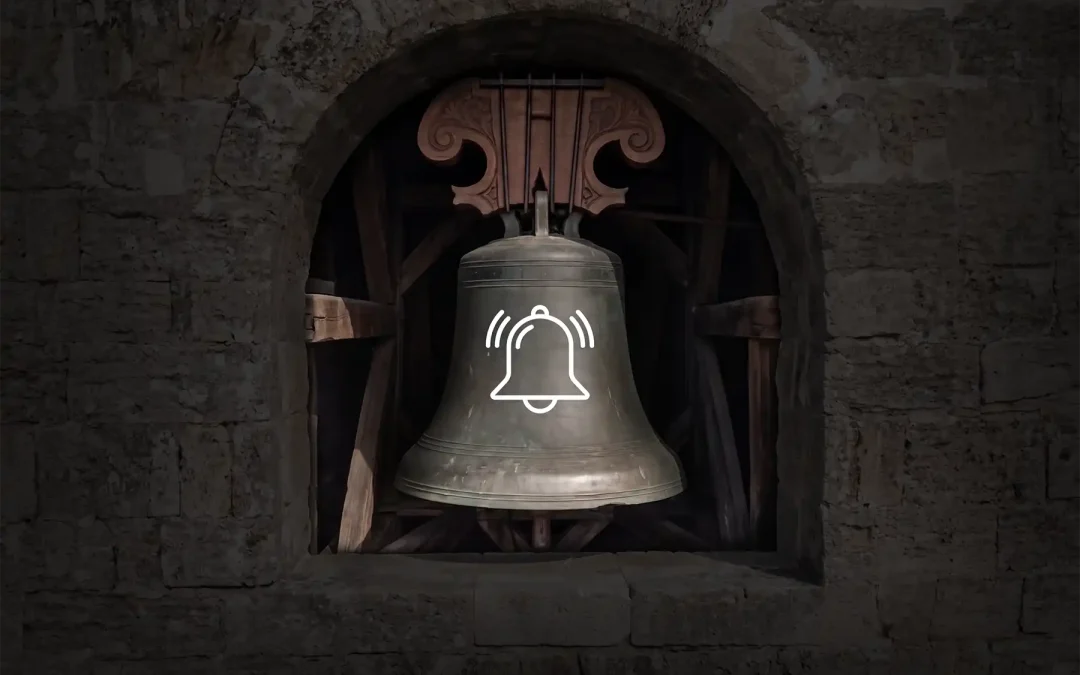
The Liturgy of the Interface
Church bells and push notifications, confession and the Genius Bar: an essay on the psychological architecture shared by ritual and interface design and where the analogy breaks down.

Scarcity and luxury brand discipline
Scarcity isn’t one tactic – it’s three. From fake e-commerce timers to Labubu’s collapse to Chanel’s century-long price discipline, here’s what actually separates them.

Louis Vuitton Design Systems
Louis Vuitton never chose between reach and exclusivity. Iit built a system that separates the two. A design-systems lesson for brand and product teams.
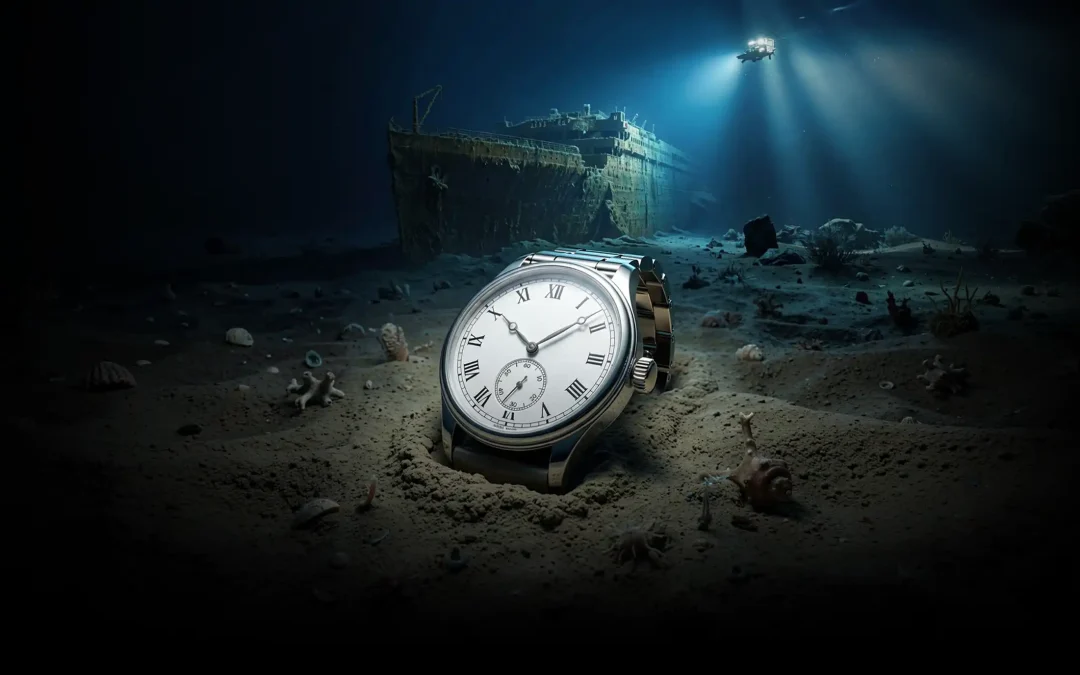
Luxury Brands – outlasting stormy (AI) seas
AI has made visual perfection cheap. And that creates a strange problem for luxury brands. For decades, the perfect image was scarce. It required photographers, locations, sets, retouching, craft, time. Now the image itself can be generated in seconds. So what happens when the surface of luxury is no longer scarce?
SELECTED WORK
A curated selection of branding and digital product design projects. My work focuses on creating coherent brand experiences that bridge the gap between human perception and functional utility, helping organizations translate complex strategic goals into enduring digital products.



International Freelance Creative Director & Digital Product Designer
Let's create something meaningful together
I love what I do - for me, design is less of a job and more of a calling. That's why I enjoy working with ambitious individuals and mid-sized businesses just as much as I do with global players. If you bring that same passion to your project, I’d love to hear from you. Let’s find out together how we can take your vision to the next level.