
Essay — Brand Strategy & Psychology
Manipulation
Through Branding
Recognise it. Understand it. Break free from it.
The Timeless Mechanics of the Crowd
and the Ethics of Design
Technology evolves exponentially. Human biology does not. This is the fundamental asymmetry on which a large part of the modern world of communication, politics, and branding is built.
When the sociologist Gustave Le Bon published his landmark work The Crowd: A Study of the Popular Mind in 1895, he described people physically gathered in marketplaces and halls. He observed how the rational, self-accountable individual vanishes the moment a crowd forms, giving way to an impulsive, easily steered collective mind. We may look back on the late nineteenth century with a certain superiority today. We think of ourselves as emancipated, enlightened, individual. Yet the behavioural and neurobiological realities tell a different story.
We no longer need to gather in marketplaces. The contagion of crowds happens silently on screens. But the mechanisms governing our behaviour have remained exactly the same. Nobel laureate Daniel Kahneman confirmed in his behavioural economics research (Thinking, Fast and Slow, 2011) what Le Bon had grasped intuitively: the brain operates on two systems. The slow, rational System 2 requires effort. The fast, emotional, associative System 1 runs on autopilot.
When algorithms keep us in a state of constant emotional arousal through deliberate rage-baiting; when political actors trigger our evolutionary fear of the other — documented in Tajfel and Turner's Social Identity Theory (1979) — through simple enemy images; when digital interfaces manufacture panic through artificial scarcity: that is no longer communication. It is manipulation. It is the systematic attempt to override the free will of the user or the voter.
This book is not a guide to such tactics. It is the opposite. It was written from the deep conviction that design — whether in corporate branding, the UX/UI of a platform, or the architecture of a political vision — carries ethical responsibility. Real brands and genuine leaders have no need for manipulation. They operate from a place of calm authority. Form must follow genuine meaning — not the conversion rate.
In the chapters that follow, we will dissect the architecture of deception. We will analyse how psychological mechanisms have been deployed — from historical dictatorships to modern tech giants (cf. Shoshana Zuboff's The Age of Surveillance Capitalism, 2018). Each chapter sets manipulative dark patterns and historical dead ends against the concepts of genuine, sustainable design and inspiring leadership.
The goal is emancipation. Whoever recognises the invisible threads pulling at their own thinking and behaviour can cut them. Only those who understand the mechanics of manipulation can consciously choose not to use them — and instead design spaces that respect free will and create real, lasting connection.
The Invisible Threads —
How Crowds Form
The transition from thinking individual to part of a steerable crowd rarely happens with a loud crack. It is quiet, gradual, and paradoxically feels to those affected like a free decision. That is exactly where the power of crowd psychology lies.
To understand how brands, platforms, and political actors steer us, we need to examine the psychological architecture behind this shift. There are essentially three invisible threads that bind us to the collective: the loss of individual identity, the rapid velocity of mental contagion, and the pain of admitting a mistake to ourselves.
1.1 The Loss of Self — Deindividuation
The foundation of every crowd is the dissolution of individual accountability. Le Bon called it the "feeling of invincible power" that arises from sheer numbers. Modern psychology calls it deindividuation.
TheoryPsychologist Philip Zimbardo developed and popularised the concept in the late 1960s. His studies showed: once people become anonymous within a group — through uniforms, darkness, or sheer mass — their self-awareness drops. The inner moral controls that guide us in daily life switch off. The individual no longer asks "Is this right?" but blindly orients itself to the group's behaviour. Without fear of personal consequences, inhibitions fall and extreme behaviours emerge.
PracticeThis anonymity no longer requires physical marketplaces. A glowing screen is sufficient as a mask.
- The digital mob. When people act online under pseudonyms or within the safety of an outraged comment thread, they write things they would never say to another person's face. Deindividuation decouples the keyboard from the conscience.
- The Black Friday effect in commerce. When an online shop reports "240 other people are viewing this item right now," combined with a ticking countdown, it artificially manufactures the feeling of a pressing crowd. The user is no longer alone — they are competing with an invisible mass. Reason shuts down. Herd instinct takes over.
1.2 Mental Contagion and the Architecture of Algorithms
Once the individual has lowered their defences, the second step is ready: contagion. Le Bon compared the spread of emotions through a crowd to a biological epidemic — with precision.
TheoryA landmark MIT study (Vosoughi, Roy & Aral), published in Science in 2018, examined the spread of true and false news on Twitter over ten years. The finding was stark: false stories spread significantly faster, deeper, and further than the truth. A false report reached 1,500 people six times faster than accurate information. The reason is the negativity bias: the brain is evolutionarily tuned to react far more strongly to threats, novelty, and moral outrage than to reassuring facts.
Practice- The red badge. The small red dot in the corner of an app icon is a banal but powerful example of UI design that synchronises crowds. Red signals danger and urgency. It creates a psychological itch. Even when the notification is completely irrelevant, the stimulus compels us to open the app.
- Rage-baiting. Social media algorithms are not programmed to promote valuable discourse. They reward content that triggers. Mental contagion becomes the business model. By permanently surfacing content that provokes, the user base is held in a state of constant cognitive arousal — the perfect breeding ground for irrational decisions.
1.3 Cognitive Dissonance and the Ego Trap
TheorySocial psychologist Leon Festinger developed the theory of cognitive dissonance in 1957. It states that people experience massive inner discomfort when their beliefs, values, or actions conflict with one another. To resolve this pain, they do not change their behaviour or admit a mistake — that would wound the ego too deeply. Instead, they rationalise reality, ignore facts, or devalue critics in order to justify their original decision.
Practice- Hype brands and buyer's remorse. Imagine someone who has spent thousands of euros on an overpriced, mediocre product after months of anticipation and social pressure. When critics dismantle the product rationally, the buyer will often defend it with quasi-religious fervour. In that moment, they are not defending the product. They are defending their own self-image.
- Loyalty through error. In politics, cognitive dissonance also causes followers to close ranks more tightly after a scandal is exposed. The crowd convinces itself that everyone else — the press, the scientists, the critics — must be part of a conspiracy, simply to avoid facing a painful truth: we were wrong.
Deindividuation strips us of responsibility. Mental contagion supplies the emotion. Cognitive dissonance cements our blindness. These three threads form the architecture of deception. But as history has repeatedly shown, they are not invulnerable.
The Dark Side —
Historical Power and Toxic Brands
When we understand the mechanisms of deindividuation and mental contagion, the question of the perpetrator becomes unavoidable. Who pulls the invisible threads? History teaches us that knowledge of human psychology has always been a weapon.
In the hands of dictators, cult leaders, or unscrupulous corporations, psychological insight becomes an industrialised practice of deception. This dark side of crowd leadership and branding shares one defining characteristic: it holds free will in contempt.
2.1 The Rule of Fear and the Scapegoat
TheoryThe most efficient way to disable rational thinking is existential fear. Fear is not an intellectual concept. It is a biological survival reflex. Intense fear causes the amygdala — our emotional alarm centre — to take command and suppress activity in the prefrontal cortex, the seat of rational, deliberative thought. Tajfel and Turner's Social Identity Theory (1979) explains the next step: people under threat seek immediate safety in the group. To strengthen that belonging and convert diffuse fear into a tangible target, an external threat is constructed: the scapegoat.
PracticeA complex, systemic problem exceeds the cognitive capacity of the crowd. The dark leader offers relief from this overwhelm by projecting blame onto a clearly defined minority. The crowd no longer needs to solve the complex problem. It only needs to fight the scapegoat. The leader positions himself as the sole protector. Whoever controls the fear controls the crowd's reality.
2.2 Masters of Manipulation — A Historical Excursion
- Ancient Egypt and Rome. Manipulation was carved in stone. Monumental architecture crushed the individual psychologically. Rome later perfected distraction: panem et circenses. As long as the crowd received bloody spectacle and free grain, it did not question the corruption of the elites. The question of whether this still works today is answered by a glance at streaming services.
- Cults and dogmatic religion. In the Middle Ages, the instrument became immaterial but all the more powerful. The instrumentalisation of the deepest fear — eternal damnation — coupled with the exclusive promise of salvation, created an absolutist system of submission. Dissenters were destroyed as heretics, to prevent cognitive dissonance from arising in the faithful at all.
- The National Socialists and the industrialisation of propaganda. In the twentieth century, Le Bon's insights met mass media — radio, film — and the findings of psychoanalysis. Goebbels studied Le Bon meticulously. Edward Bernays, Freud's nephew and pioneer of modern PR, unwittingly provided the blueprint for using unconscious drives in campaigns. The result: complex politics reduced to hate-filled slogans; overwhelming visual language in Riefenstahl's films; symbols that instantly marked belonging or exclusion. Monumental architecture (Albert Speer) and choreographed mass rituals enforced total deindividuation. It was the absolute perversion of form and psychological function.
2.3 How Propaganda Rewires the Brain
TheorySustained manipulation is a hardware problem. Propaganda changes the physical structure of the brain. The illusory truth effect (Hasher, Goldstein & Toppino, 1977) shows that mere repetition of a false statement eventually leads people to believe it — the brain mistakes processing fluency for truth. The Hebbian principle explains the rest: neurons that fire together, wire together. Years of constant fear and outrage physically enlarge the amygdala while weakening connections to the prefrontal cortex.
PracticePeople exposed to toxic propaganda for years literally lose the biological capacity for nuance and empathy. Facts bounce off — because the neural highways for fear and defence are so massively built up that any divergent information registers as a physical threat to survival. The crowd was not merely persuaded. Its brain was reprogrammed for compliance.
2.4 When Brands Become Manipulators
TheoryCognitive scientist Harry Brignull coined "dark patterns": interfaces designed to push users toward actions they did not actually intend, built on Cialdini's persuasion principles (1984) — particularly scarcity and social proof.
Practice- Fast fashion and FOMO. "Only 1 item left! 38 others are viewing this right now!" is often a programmed lie. It manufactures panic artificially, forcing the user into System 1 autopilot before the rational mind can intervene.
- The roach motel. Entering a subscription is frictionless and one click. Cancelling is a labyrinth of hidden links, emotional blackmail, and deliberately confusing visual hierarchy.
- Exhaustion by confusion. Cookie banners where "Accept all" is large and luminous, while opting out requires navigating tiny toggles in endless submenus, exploit the cognitive fatigue of the crowd.
In all these cases, design is no longer a bridge between user and product. It is a trap. Toxic brands create no value. They extract cognitive vulnerabilities.
The Bright Side —
How Real Brands Win the Brain
The preceding chapters revealed an uncomfortable truth: the human brain is not a sovereign judge. It is an energy-saving device. It seeks relief, not truth. Whoever understands this has power.
The question this chapter asks is not moral. It is mechanical: what psychological processes do brands activate when they build deep, lasting loyalty without fear, artificial scarcity, or dark patterns? Manipulation pulls a single lever: the survival instinct. Real brand loyalty operates on multiple levels simultaneously — aesthetic, identity-based, cognitive. That makes it harder to build. And incomparably more durable.
3.1 What the Brain Decides Before the Mind Switches On
Neuroscientist Antonio Damasio's studies of patients with prefrontal cortex damage revealed a paradoxical pattern. These people could reason logically, enumerate options, name consequences — but they could not make decisions. Even trivial choices paralysed them. Damasio's conclusion, in Descartes' Error (1994), was radical: emotions are not interference in the decision process. They are its precondition.
For brand leadership this means: the rational layer — specifications, price, comparison tables — is not where decisions are made. It is where they are justified after the fact. Semir Zeki showed that visual stimuli activate the brain's reward centre before conscious thought engages at all. Kurosu and Kashimura's 1995 ATM study (252 participants, 26 interface variants) confirmed that more aesthetically appealing designs were rated as more functional, regardless of actual functionality. Form creates trust before content is read.
3.2 Identity Fusion — Why People Voluntarily Become Part of a Brand
Social psychologist William Swann developed the concept of identity fusion from 2009 onward: a state in which the boundaries between personal and social identity become permeable — not through pressure or fear, but through deep perceived alignment of values. People experiencing identity fusion act not from conformity pressure but from intrinsic conviction. An attack on the group feels like an attack on the self.
Strong brands produce exactly this state without forcing it. They do not define what their users consume. They define who their users are. Harley-Davidson does not sell motorcycles. It offers people the possibility of becoming someone who rides a Harley. The out-group's rejection is not a marketing problem — it is social adhesive for the in-group.
3.3 Craft as Psychological Proof
A Swiss mechanical watch does not tell time more accurately than a smartphone. An analogue Leica lens does not produce sharper images than modern Zeiss glass. Yet these objects attract a category of loyalty that precision digital products do not reach. Matthew Crawford argues in The World Beyond Your Head (2015) that haptic and material experiences are processed more concretely and durably by the brain. Craft communicates nonverbally: someone invested time, someone invested competence.
In cognitive psychology, this corresponds to processing fluency: stimuli the brain experiences as coherent are rated as trustworthy. The craft is not for the buyer. It is for the buyer's brain — the proof that secures, after the fact, an emotional decision already made.
3.4 Form Follows Meaning — The One Condition
All the mechanisms described function under a single condition: consistency between form and substance. Patagonia's "Don't buy this jacket" campaign was psychologically sophisticated — it signalled coherence, generated identity fusion, built trust through apparent self-harm. But Patagonia is simultaneously a billion-dollar company that continuously expands its production. When the form is not backed long-term by the substance, a specific effect occurs: loss of trust proportional to the depth of prior loyalty. Identity fusion makes brand failures personal.
The Counter-Model —
Leading Through Inspiration
Fear-based leadership is efficient. It is also fragile — it collapses the moment the leader fails as a source of protection. Which psychological mechanisms replace fear when it is removed as a leadership instrument?
4.1 Gandhi — The Psychology of Embodied Truth
When Gandhi is examined through the analytical lens of crowd psychology, what is first noticeable is what is absent. No enemy image in the biological sense. No aura of invincibility, no military pomp. No mass rituals enforcing deindividuation through overwhelming symbolism.
Bass and Riggio's concept of transformational leadership (2006) describes what Gandhi deployed instead — operating through four mechanisms: moral role-modelling, inspiring motivation, intellectual stimulation, and individual recognition. The decisive effect: the transformational leader changes not behaviour through external pressure, but the values and goals of the led themselves.
Cialdini's consistency principle explains Gandhi's intensity: people follow leaders where word and action align with an intensity that far exceeds rational persuasion. Gandhi demanded non-violence and practised it under physical threat. He demanded independence from British goods and sat daily at his spinning wheel. The wheel was not a decorative symbol. It was the material proof of a claim. Form followed meaning as a daily, visible act.
Rizzolatti's discovery of mirror neurons provides the neurobiological foundation: the brain internally simulates observed actions. The crowd followed Gandhi because their brains had already performed his actions — restraint, dignity, endurance — before they had taken a single step themselves. Gandhi's movement outlived him because people were following their own transformed conviction, not his protection.
4.2 Steve Jobs — Inspiration at the Borderline
Gandhi never approached the boundary between transformational and manipulative leadership. Jobs is the contrasting example — he operated precisely at that boundary, sometimes on one side, sometimes on the other.
The "Think Different" campaign of 1997 is perhaps the most precise commercial example of transformational communication: it defined not the product but the person who uses it, through association with people who had actually changed the world. Simultaneously, Jobs was a master of what his employees called the Reality Distortion Field — creating, through intensity and selective perception, a reality that overrode the factual one. That is not fear in the biological sense. But it is reality distortion, operating close to the mechanisms of the dark side.
What separates Jobs from the manipulators of Chapter Two is a single variable: product substance. The Reality Distortion Field worked long-term because the products often delivered on the claims. When form redeems meaning, identity fusion holds. When it does not — MobileMe, Antennagate — the bond tears.
4.3 What Both Examples Share
Gandhi and Jobs could hardly be further apart. That makes what they share all the more striking: both generated loyalty through consistency between stance and action; both defined an identity for their followers, not merely a membership; both used symbols that were evidential, not decorative.
Fear-based leadership narrows. It reduces cognitive capacity, creates dependency, and binds people to the leader as a source of protection. Transformational leadership expands. It changes what the led believe to be possible — from their own drive. The brain is not outwitted. It is changed. The difference is mechanical. And it determines what remains after a leader or a brand ends.
Emancipation —
Reclaiming Your Own Thinking
Le Bon was a pessimist. Whoever crosses the threshold into the crowd loses their mind — that was his diagnosis. But Le Bon described a condition, not a force of nature. And conditions can be left behind.
Emancipation here means the recovery of one very specific capacity: the space between stimulus and response. Rage-baiting destroys it through speed. Fear-based leadership through survival pressure. Dark patterns through cognitive exhaustion. Whoever reclaims this space removes the lever from every one of these mechanisms.
5.1 The Architecture of the Pause
Viktor Frankl: "Between stimulus and response there is a space. In that space is our power to choose our response. In our response lies our growth and our freedom." He wrote this as a psychiatrist and as a survivor of the concentration camps — as someone who had lived through the most extreme conditions imaginable for the destruction of that space, and had defended it regardless.
James Gross of Stanford showed in studies from 1998 onward that cognitive reappraisal — observing and revaluing an emotional state as it arises — produces systematically better decisions under emotional pressure and greater resistance to social manipulation. Crucially: this is not a personality trait. It is a learnable practice.
Jack Brehm's Psychological Reactance Theory (1966) explains the structural resistance: whoever lives in constant algorithmic stimulation without noticing it loses not only the capacity for the pause — they lose the awareness that they have lost it. The manipulation is complete when the victim takes it for their own opinion.
5.2 Starving the Algorithm
The "information diet" metaphor is popular and imprecise. Less consumption without a change of direction produces only a smaller echo chamber. Eli Pariser's filter bubble arises not from frequency but from one-sidedness. A person who consumes one hour of high-quality media from opposing perspectives daily is cognitively freer than someone who spends twenty minutes in their own algorithmic mirror.
The Hebbian rule explains why: whoever consumes exclusively confirming content literally builds a brain architecture that processes divergent information as a threat. The counter-strategy is active friction. The measure of cognitive sovereignty is not whether you end up with a different opinion — it is whether you can formulate the opposing argument with the same precision as your own. Mill stated it in On Liberty (1859): whoever does not know the opposing position does not truly know their own.
5.3 The Maturity of Doubt
Else Frenkel-Brunswik's concept of ambiguity tolerance — developed in the 1940s within the Frankfurt School — showed that low ambiguity tolerance is one of the strongest predictors of susceptibility to authoritarian worldviews. Whoever cannot endure uncertainty seeks certainty, and certainty is delivered by whoever claims it loudly enough.
Arie Kruglanski's research on the need for cognitive closure confirms the mechanism: this need increases massively under stress, time pressure, and emotional exhaustion — the exact conditions that algorithms and demagogues actively manufacture. That is not coincidence. It is design.
The remedy is a specific form of courage: the willingness to publicly acknowledge one's own error. In the logic of crowd psychology, this is weakness. In the logic of emancipated thinking, it is the opposite: an ego that can admit its error has no fear of itself. It needs no scapegoat, no filter bubble, no demagogue to remain stable.
The Designer's Choice
We return to the starting point.
Technology evolves exponentially. Human biology does not. The mechanisms Le Bon observed in 1895 now run on servers that optimise billions of decisions per millisecond. The brain they exploit has remained the same.
What has changed is the precision of the exploitation. A twentieth-century dictator needed mass gatherings, media synchronisation, and years of conditioning. A twenty-first-century algorithm does the same in real time, personalised, scaled, without uniform, without torchlight parade. The industrialisation of propaganda that Goebbels operated through radio and film was an early version. What runs today is the same system with unlimited A/B testing across three billion users.
That is the context in which everyone who designs communication works. It is not a neutral context.
Whoever builds interfaces, designs brands, conceives campaigns, or formulates political messages works with the same tools this book has dissected. A colour code has no ethics. An interface has no stance. Both acquire their ethics only through the decision of the person who designs them.
That is the point at which analysis ends and decision begins.
The decision is not: do I manipulate or not? That formulation is too comfortable — it implies that non-manipulation is a state of inaction. The decision is: for which system of the human brain do I design? For the fast, stimulus-driven system that responds to fear, scarcity, and social pressure? Or for the slow, judging, meaning-seeking system that builds trust, forms identity, and generates loyalty that does not require the next trigger?
Both paths work. That is the uncomfortable truth this book refused to conceal. Manipulation through dark patterns raises conversion rates. Rage-baiting increases reach. Fear-based leadership mobilises crowds. The question is not whether these methods work. The question is what they leave behind.
What fear leaves behind: brains literally rebuilt, their neural capacity for nuance and empathy physically shrunk, processing every contradiction as a threat to survival. What it leaves in brands: buyers who defend the product because the alternative is to defend their own judgement. What it leaves in societies is documented.
What trust leaves behind is harder to measure and slower to build. It is a loyalty that does not collapse when the countdown ends or the leader falls. It is less predictable, less scalable, less immediate. It is the only thing that lasts.
The asymmetry between biological constancy and technological acceleration cannot be resolved. The human brain will not evolve faster than the systems that exploit it. But it can learn to recognise those systems. And whoever designs them can decide on which side of that asymmetry to place their work.
That is not a question of attitude. It is a question of consequence.

About the Author
These essays are written by Christoph Gey, an independent Creative Director and Digital Product Designer based in Germany. With over 15 years of industry experience, his work focuses on the strategic intersection of premium branding and complex digital products.
Within these articles, he explores the deeper mechanics of design - ranging from brand strategy and user experience to neuroaesthetics. True to the philosophy that form follows meaning, these insights are crafted for decision-makers who believe that enduring brands demand substance, not just decoration.
MORE ESSAYS

Louis Vuitton Design Systems
Louis Vuitton never chose between reach and exclusivity. Iit built a system that separates the two. A design-systems lesson for brand and product teams.
Luxury Brands – outlasting stormy (AI) seas
AI has made visual perfection cheap. And that creates a strange problem for luxury brands. For decades, the perfect image was scarce. It required photographers, locations, sets, retouching, craft, time. Now the image itself can be generated in seconds. So what happens when the surface of luxury is no longer scarce?

Craft becomes luxury
Why does real craft grow more valuable, not less, in the age of generative AI? A practitioner’s case, backed by research on effort justification and the IKEA effect, for keeping the first line human and where AI genuinely earns its place in the process.
Architecture of wakefulness
Attention is the creative director’s most underrated weapon. An essay on sleepwalking through creative work and the discipline of never looking away.

Perception Architecture
Audience logic asks who someone is. Perception architecture asks what state they’re in and why that question changes everything about how digital products should be designed.
How to design for dyslexia?
How do you design digital products for people with dyslexia? An essay on typography, structure, and the neuroaesthetics of real accessibility.

What Does a Creative Director Actually Do?
The standard definition explains what a Creative Director does. It doesn’t explain why so many lose their judgment the moment they stop designing themselves.
The Locard principle in branding
Every contact leaves a trace. Not an impression – evidence. A forensic reading of what brands actually deposit in the minds they touch, and why volume alone builds nothing but noise

Creative Humility Insights of an international Creative Director
Working in luxury branding while driving a Dacia. Designing desire for others while deliberately choosing things that need no logo. This is not a contradiction. It is the distance I need to do the work well.
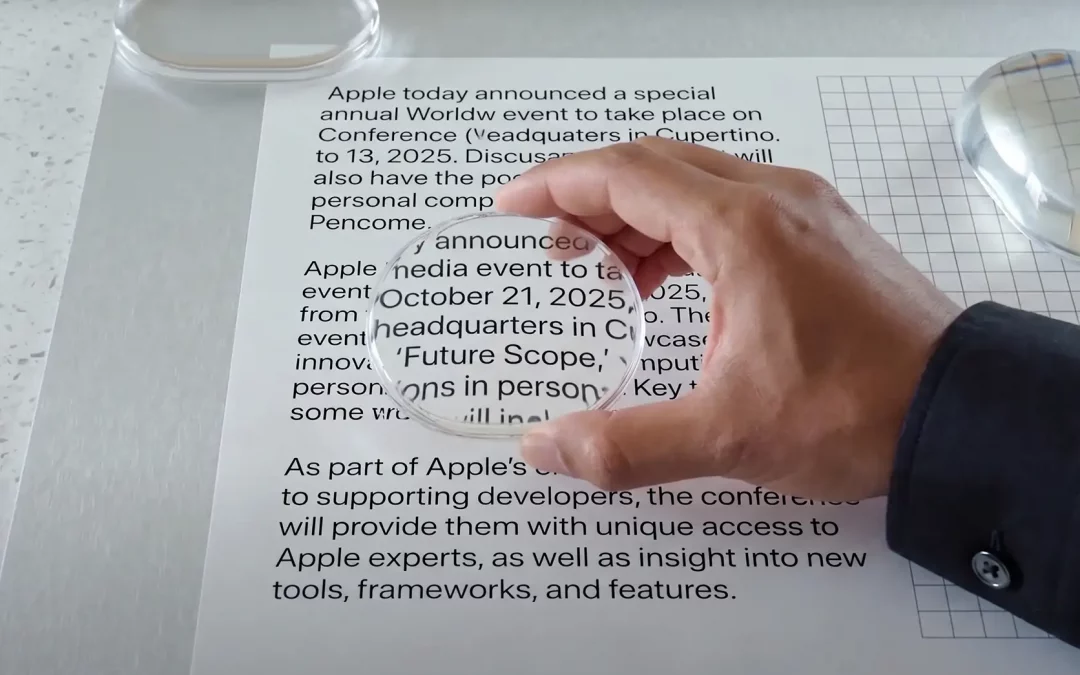
10 Methods for Constructing Visual Brand Expression
Methods have a bad reputation in the creative industry. They are seen as a crutch – a confession that inspiration has failed. The opposite is true. I used them from A Bola to Audi: ten tools for anyone stuck in a creative block who needs a precise way out.
SELECTED WORK
A curated selection of branding and digital product design projects. My work focuses on creating coherent brand experiences that bridge the gap between human perception and functional utility, helping organizations translate complex strategic goals into enduring digital products.








International Freelance Creative Director & Digital Product Designer
Let's create something meaningful together
I love what I do - for me, design is less of a job and more of a calling. That's why I enjoy working with ambitious individuals and mid-sized businesses just as much as I do with global players. If you bring that same passion to your project, I’d love to hear from you. Let’s find out together how we can take your vision to the next level.