Creative Director – Between Obsession and Mastery
A student promises total dedication. The master doubles the time. This essay explores why obsession alone slows mastery down and what creative directors can learn from a swordsmith who already knew.

A student promises total dedication. The master doubles the time. This essay explores why obsession alone slows mastery down and what creative directors can learn from a swordsmith who already knew.

Most international design failures aren’t technical. They’re intellectual. The quiet assumption that your own aesthetic logic is universal. That a clean layout reads as trustworthy everywhere, that a thumbs-up means approval, that white signals freshness. It doesn’t. This essay examines what cognitive science, anthropology, and the world’s most-used digital platforms reveal about designing across cultures and why humility, not methodology, is the designer’s most important tool.

Creativity is not a gift. It is a decision. But most creative environments punish the one thing that makes it possible: the willingness to not know yet. An essay on premature certainty, controlled randomness, and what a pencil sketch taught me about digital design.

Ego and self-confidence have always been a topic in the design industry.
Everyone has an opinion on it.
Few talk about the moments where they got it wrong.
The difference is smaller than you think and larger than you hope.
Ego protects your idea. Self-confidence protects the best idea. Whoever had it.
Three stories from my own work where that distinction made all the difference.

Taste is not a matter of opinion. It is a system. Built from biology, culture, class and training. And only at the very end: from the individual. An essay on what good taste actually is and why even refined judgment remains a trap.

The human brain refuses to be a target audience.
I learned that not in a design studio. I learned it during my civil service — working with people living with schizophrenia, borderline disorder, and severe depression.
What I saw there became a design principle I’ve never been able to shake: behind every reaction is a history no dataset captures.

Technology evolves exponentially, while human biology remains static. Christoph Gey dissects how modern branding and algorithmic design exploit this gap to bypass rational thought. By analyzing psychological mechanisms like cognitive dissonance, this essay reveals how manipulation targets the brain’s emotional systems. Learn to recognize these “invisible threads” and discover a counter-model for design and leadership that prioritizes genuine authority and independent thinking.
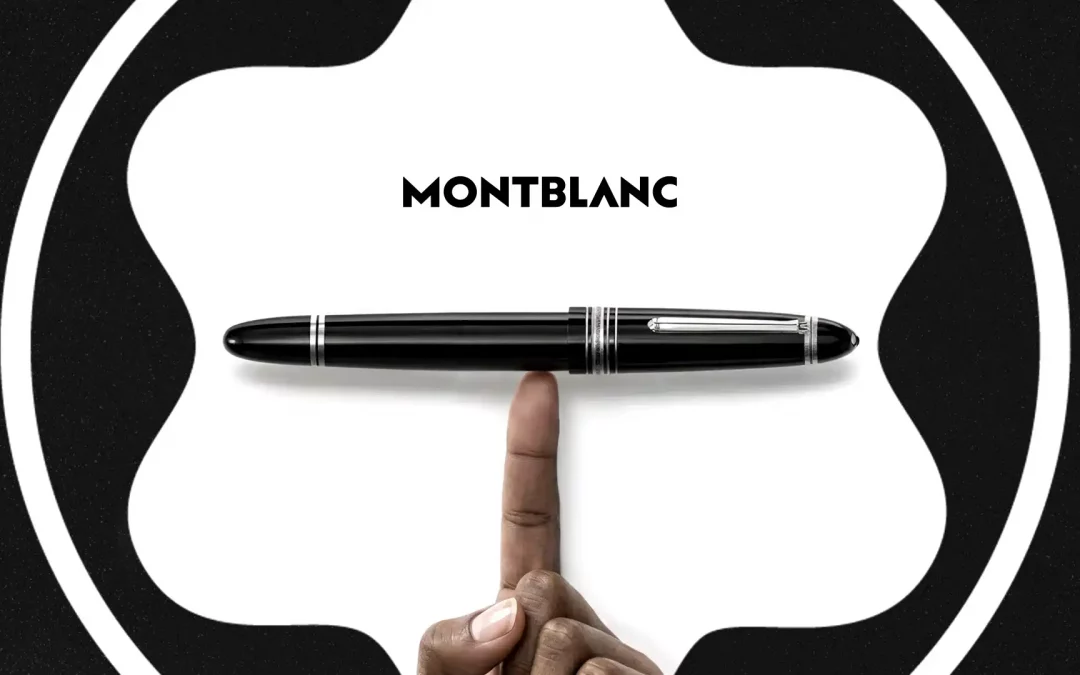
Some objects carry a weight no scale can register. A Montblanc fountain pen is not just a tool. It is a certificate of a completed posture. In an era of disposable digital design, why does this brand remain an untouchable status symbol? This essay deconstructs the “Architecture of Continuity,” exploring why modern brands fail to build lasting myths, and why true mastery requires the courage to refuse the trend – even when it costs you everything.

Creativity is not a personality trait — it is a discipline. In this essay, Berlin-based freelance Creative Director Christoph Gey dismantles the myth of innate talent and argues, drawing on neuroscience and Google’s Project Aristotle, that creativity is a trainable rhythm — and that permission is its only true prerequisite.

A brand is a contract of expectation. When that contract is broken by design – through hidden fees, manipulative flows, and engineered addiction – the user doesn’t complain. They leave. This essay examines the mechanics of greed in UX, from Facebook’s confessed dopamine loops to Amazon’s $2.5 billion dark patterns settlement, and argues for the only alternative that actually works: designing for trust.