steda
Crafting a digital identity with tactile presence
Craftsmanship meets digital implementation
Steda is a German manufacturer of high-quality garden architecture — wooden and metal structures that live outside, in the hands of makers, builders, and homeowners. Their products are physical, raw, architectural: pergolas, garden houses, carports, roofings and more — each piece the result of real materials and real craft.
Challenge
Steda had to evolve visually and adapt to market conditions in order not to be left behind by its competitors.
Strategy & Narrative
I developed two key ambitions:
-
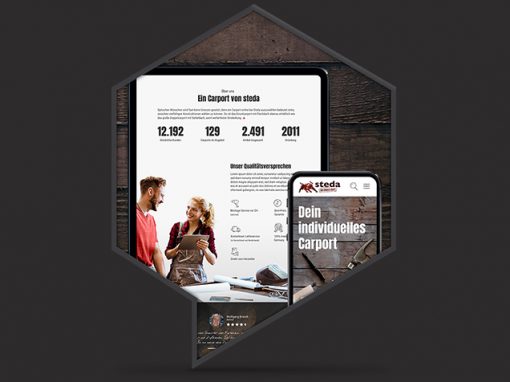
Showcase the material reality of their work — the grain of wood, the temper of metal, the hand of tools without being kitschy.
-
Bring the online experience closer to the tactile and human process of conception, not just product listing.
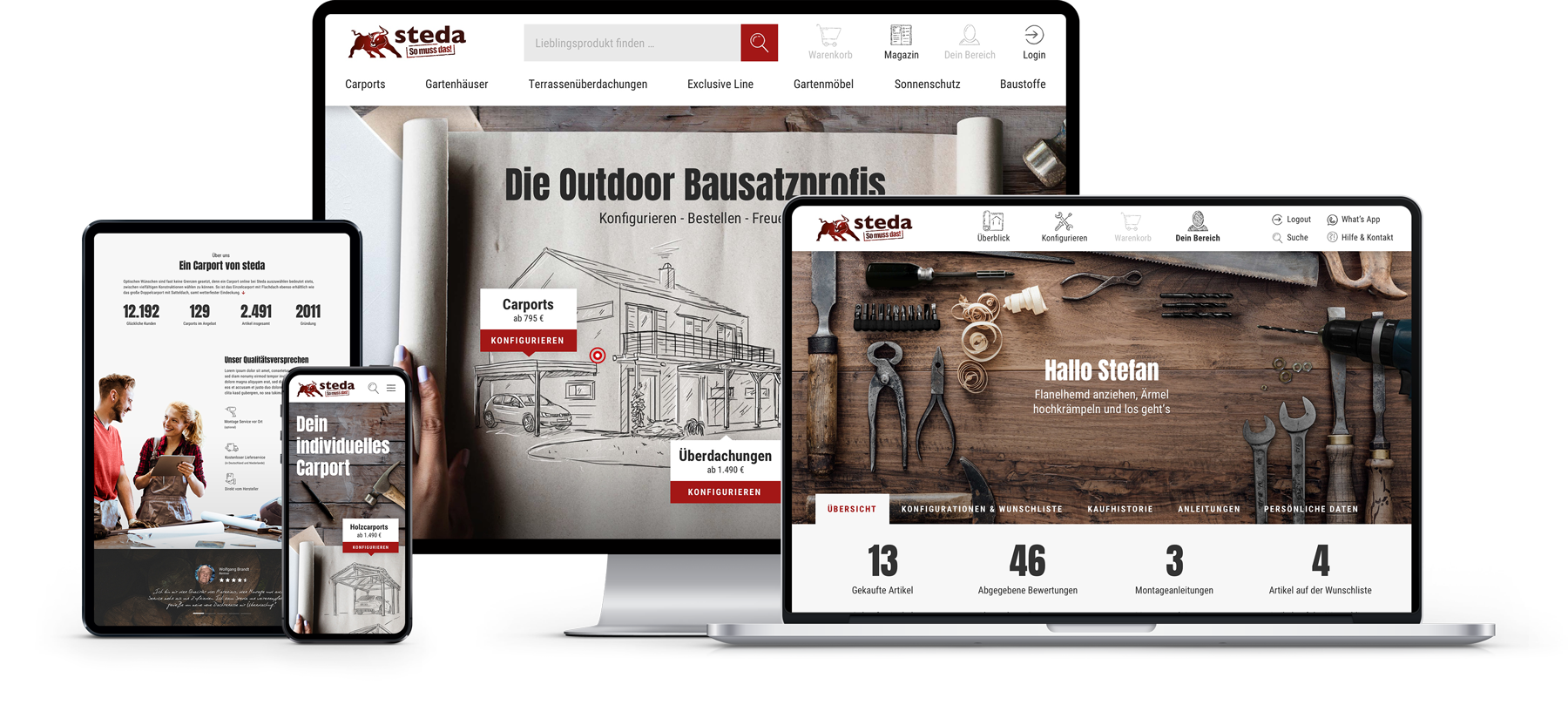
From the outset it was clear this wasn’t going to be a sterile, grid-driven webshop — it had to feel like wood in your hand, steel under your eye, like something you could almost touch through the interface.
Agency: Netzhaut Netzwerk
Client: steda GmbH & Co. KG
My role: Creative Director, Art Director, UX&UI Designer & Illustrator

Design
At the core of the project was a visual metaphor for making:
An idea begins rough — like a sketch. As it matures, it becomes more defined. And eventually, it becomes real. Just like a crafted product. That path — from sketch to finished object — became a structural narrative for the design itself.
This insight informed the entire visual logic of the site:
Drawings as connective tissue:
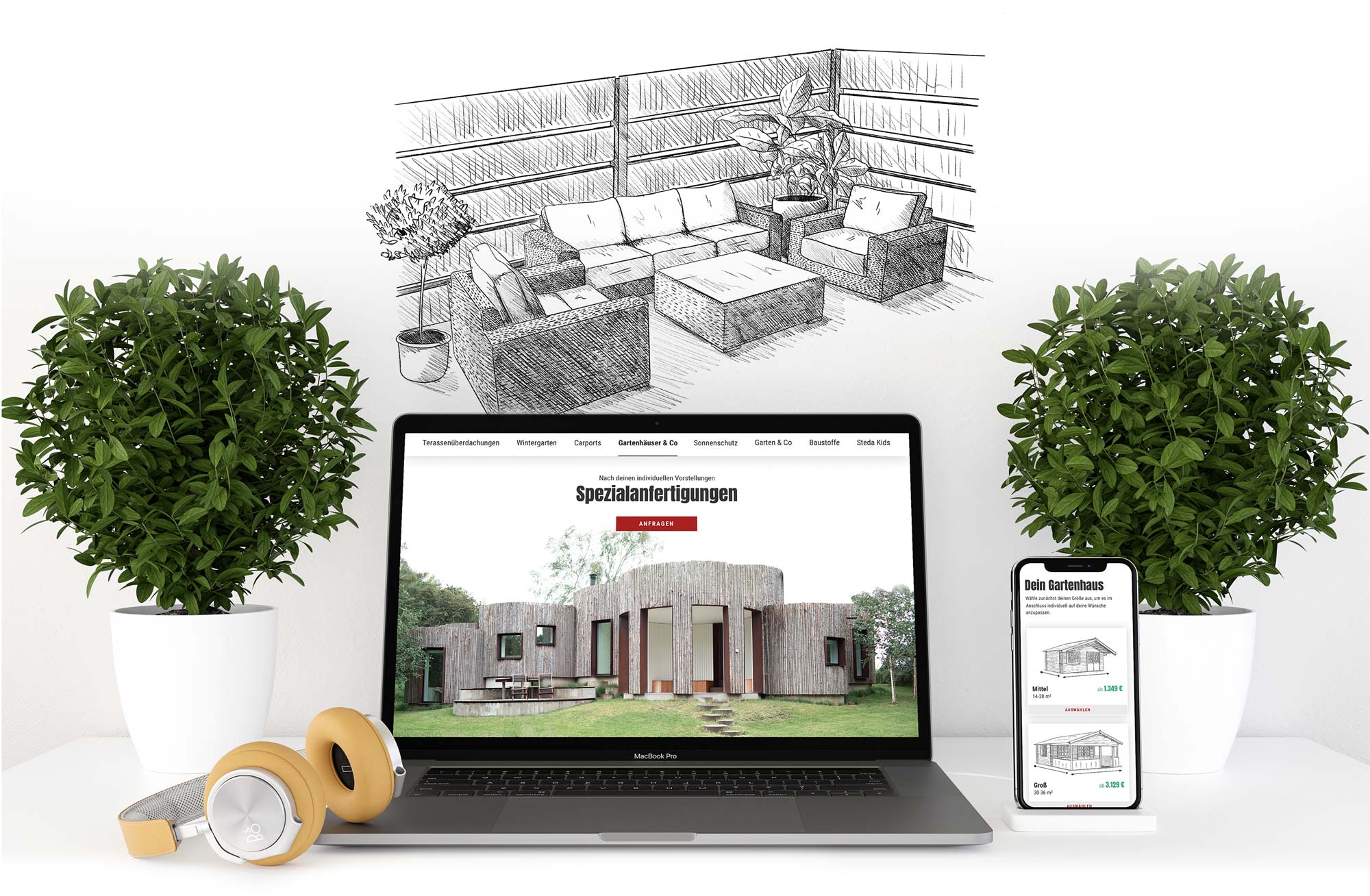
The site uses many hand-drawn illustrations and sketches — not as decoration, but as a visual expression of early ideation.
Material storytelling:
Photography isn’t abstract or staged — it shows tools, woodgrain, metal surfaces and hands-on process, driving home the craft at Steda’s core.
This isn’t just a visual trick — it’s a narrative logic that lets visitors feel the process, not just see the product.


Impact & Takeaways
The Steda project is a case of designing with respect for materiality and human process — an approach that aligns with how the products themselves are made.
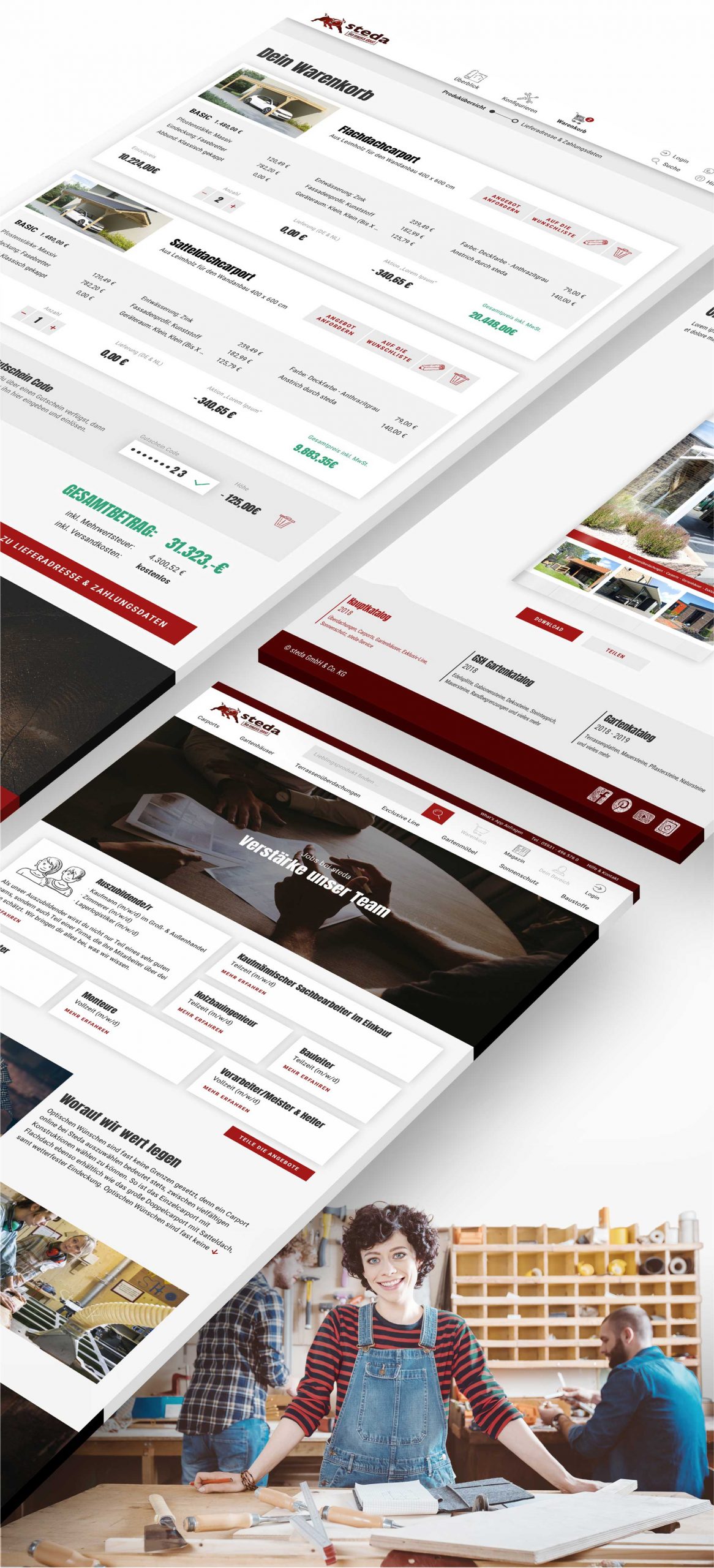
Instead of forcing a digital aesthetic onto a physical product maker, the design adapts digital behaviors to physical rhythms. Sketches become entry points. Photos of tools and raw materials become interfaces in themselves. And configurators don’t just sell product — they invite collaboration.
Design beyond decoration: Here the interface isn’t just about visual polish — it carries meaning. The visual system communicates how ideas become things, and how a brand values craft above all. That’s design with depth — not surface.


Agency
Netzhaut Netzwerk
Client
steda GmbH & Co. KG
Concepter
Christoph Gey,
Stefan Mels,
Stefan Ripperda
Christoph Gey
Freelance Senior Art Director
Christoph Gey
Consultant
Stefan Mels
Development
Oliver Lindenlauf
Tim Krüger